This post may contain affiliate links. It means I may earn a commission if you book or purchase something. This is at no cost to you and support this website. Learn more here.
Would you believe me if I said I wanted to hate diving in Raja Ampat? I feared the place would already be overrun by mass tourism and that the reefs would be beyond saving, despite being marketed as “the last paradise” on social media. My concerns grew from the fact that Raja Ampat is the most sought-after spot for diving in Indonesia, and maybe in the world, at the moment. And, spoiler alert, this is not what happened.
Before going, I reviewed online what kinds of underwater pictures were coming back to understand what was common to see in Raja Ampat. I didn’t see much that would tell me it was far superior to any other major place for scuba diving. But after my first week of diving, reviewing my pictures, it struck me. The pelagic fish swirling all around us were so many and so fast that I was never able to press the shutter fast enough with the proper settings. Many times, I resolved to shoot videos with my action cam, making sure it was always on my right wrist. Raja Ampat’s magic lies in the fast-paced action underwater. And then I stayed on Arborek Island. It was the epitome of why I do what I do: when adventure and culture meet. Now I get what has been drawing people for the last 10 years, despite significant challenges in travelling to and around the area.
Organising a diving trip to Raja Ampat can be a full-time job when you don’t have weeks like I do and want to make the most of your time. That’s why I tested a little bit of everything so I could help you plan for your first trip to Raja Ampat as a scuba diver. I’ve covered everything from which islands to visit, where to stay, how to travel between islands and ways to balance your budget by snorkelling in the best free spots. Ready? Let’s dive in!
Diving in Raja Ampat at a glance
How good is diving in Raja Ampat?
How to get to Raja Ampat?

Reaching Raja Ampat takes effort. Even for someone like me, based in Indonesia, it tested my patience. For most international travellers, it means 3 flights before you land in Sorong (SOQ), the sole gateway to Raja Ampat. Then you have to take a ferry, unless you’re boarding a diving liveaboard straight away. There are no direct international flights to Sorong, so you’ll enter Indonesia via Jakarta, Makassar, or Manado and connect onward from there.
People from Europe can use the direct Amsterdam-Jakarta flight, but you can also easily fly to Jakarta from Australia and Japan. People in Singapore are lucky to have a direct connection to Manado, whereas for Americans and Canadians, it will take much longer. From North America, I’d fly via Tokyo and then onward to Jakarta. Those based on the West Coast can also fly direct to Singapore and then onward to Manado. To find the best prices on flights to Sorong Airport, you can easily compare options on Trip.com.
If you are coming from Bali, be careful about what booking engines show: the “direct” Denpasar–Sorong route is rerouted via Jakarta 90% of the time. After dealing with that frustration first-hand, my recommendation is: Bali → Manado → Sorong. Makassar looks logical on a map, but delays and cancellations with Lion Air can break a tight itinerary. Manado with Trans Nusa is more reliable in my experience, and it also lets you add Bunaken National Marine Park as a smart layover to add world-class underwater adventures to your trip.


In all cases, I recommend staying at least one night in Sorong. I stayed at the Swiss-Belhotel, which was perfectly located near the ferry harbour and an Indomaret convenience store, and a 10-minute taxi drive from the airport. On top of this, they serve excellent Indonesian and International food served at their café by the swimming pool. Oh, and did I mention that the rooms on the upper floors have the best views of Sorong?
Once you land in Sorong, you’re not done. You have 3 options:
- Board your diving liveaboard directly from Sorong
- Take the public ferry to Waisai (Waigeo Island)
- Fly a small plane to Marinda Airport (RJM) — only on Mondays and Thursdays, but with strict baggage limits (10kg allowance).


The ferry from Sorong to Waisai takes about 2 hours. VIP class with AC costs 250,000 IDR/13€; standard costs 150,000 IDR/8€ (note there is a 12,000 IDR/0,60€ harbour tax to pay in Sorong – not on the way back). VIP is worth it — but be prepared: seating is strictly assigned, and boarding with heavy dive gear is chaotic. Porters will appear instantly (50,000 IDR/2,50€ per bag). The key trap for first-timers is assuming they can “figure it out” once they arrive in Waisai. There is no booking desk for onward boats to islands like Arborek, Kri, or Gam. You must pre-arrange boat transfers with your homestay or resort.
Be aware that the local longboats used by the homestays for transfers are extremely basic: no roof, no life jackets, no radio. In calm conditions, you’ll be fine. If the weather turns, you are exposed. Note that long boat transfers are often 1 to 2 hours from Waisai. If you’re travelling light and have a high tolerance for uncertainty, that risk may feel acceptable. If you’re travelling with kids, heavy gear, or you want more predictable safety margins, either book proper speedboat transfers (way more expensive but better equipped) or stick with a liveaboard itinerary. Raja Ampat is extraordinary, but it is still frontier Indonesia, and your transport plan should take that into account.
Where are the best dive sites in Raja Ampat?

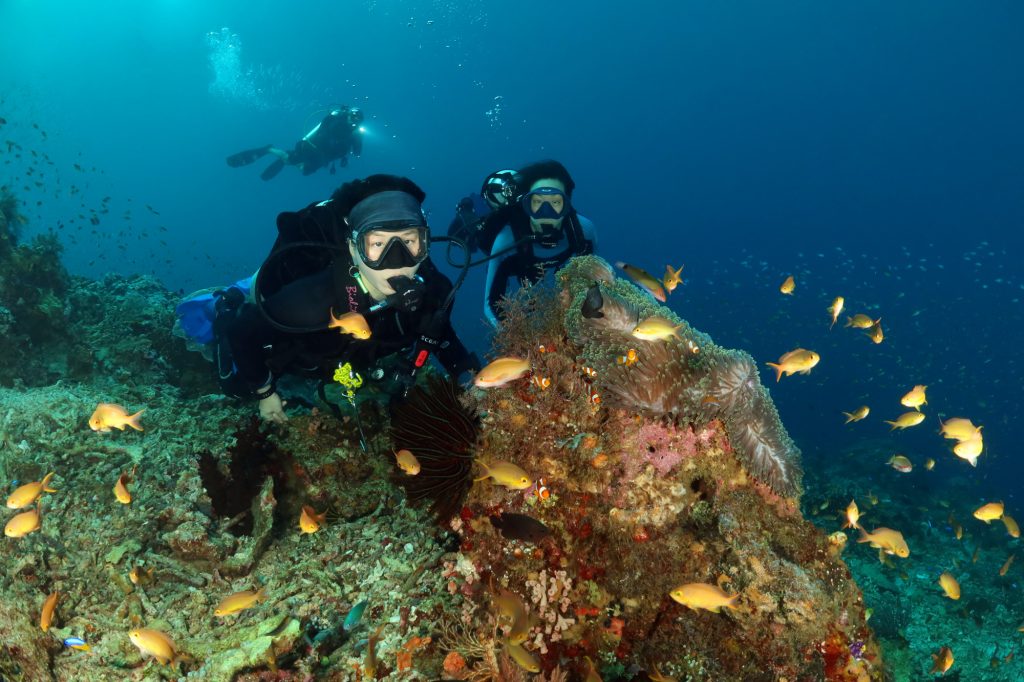
Raja Ampat is not one dive spot. It is a region with several diving areas. Understanding the geography is essential, especially for a first trip. It will help you plan far better than chasing a checklist of “must-dives.” Raja Ampat is not extraordinary because of one or two famous dive sites; it is extraordinary because of how the diving areas complement each other. Some are defined by powerful currents and large schools of pelagic species, others by shallow coral gardens, others by manta cleaning stations or macro life hiding under jetties.
Over 3 weeks, I accumulated more than 1,700 minutes underwater, which is more than a full day of my life spent diving there. Funnily enough, I passed the 1,000-dive milestone while I was in Raja Ampat, and I only realised it later when updating my logbook after another long day at sea. What follows is not a ranking of the “best” sites, but a breakdown of the main diving areas, in the order I would prioritise them as a first-timer trying to build a balanced, realistic itinerary.
Dampier Strait (Mansuar, Kri, Friwen)
For a first trip to Raja Ampat with limited time, I would focus on Dampier Strait. Dampier Strait is the beating heart of central Raja Ampat, easily reached from Waisai and surrounded by the islands of Kri, Mansuar and Gam. Currents funnel through the strait, bringing plankton and with it an extraordinary density of life. This is why most liveaboards dedicate a large portion of their itineraries here, and why iconic names like Cape Kri, Blue Magic and Sardine Reef dominate dive conversations.
That said, Dampier Strait demands respect. Currents can be strong and unpredictable, and tide timing makes a significant difference in how a site unfolds. For first-timers, especially newly certified divers, it is essential to ask operators how they plan dives around tides and to choose appropriate sites, including calmer jetty dives when needed. Advanced divers will likely find this area the most stimulating, but beginners can still enjoy it with careful planning. If I had only one week in Raja Ampat, I would build the itinerary around Dampier Strait, because it offers the most concentrated mix of sharks, schooling fish and manta encounters in a relatively compact zone.
Cape Kri
Cape Kri carries a near-mythical reputation because of its record-breaking number of fish recorded on a single dive in the Indo-Pacific [283, to be specific, on a 90 min dive]. But what struck me was not biodiversity statistics, but the layered action. This dive demands attention from the start, especially for advanced divers, often dropping to the limit of recreational diving. At 38 m deep, sweetlips form dense schools. At 25 m deep, blacktip sharks patrol the blue, where only confident divers can follow them without fear of not being able to fin-kick back to the reef. At 15 m deep, giant trevally, barracudas, fusiliers, and snappers overlap in layers, creating a constant sense of motion.
For first-timers, it is a lesson in current awareness and buoyancy control without being the craziest I’ve seen around Raja Ampat. Note that slack tide can make the site unexpectedly calm, which is precisely why timing matters. But then, as this is the exact situation I was in on my second attempt to dive there, I got a fever of mobula rays swimming right to me from the depths. It happened while all divers had their heads into the reefs, looking for pygmy seahorses, certainly bored by the lack of pelagic action due to the lack of currents. Moral of the story: always keep an eye on the blue at Cape Kri, anything can happen.


My dive parameters
29/11/2025 – 38 m – 57 min – 30°C
08/12/2025 – 28 m – 62 min – 29°C
Blue Magic
Blue Magic is a site that rewards patience and timing. The dive can begin quietly, almost deceptively so, as you drift and adjust to the current, unsure of what the reef will reveal. Then, at the exposed tip, everything shifts. Barracudas gather in loose spirals, giant trevally cut through schooling batfish, and blacktip sharks materialise from the blue. On my dive, a juvenile whitetip circled close enough for the kind of shark portrait I had been hoping for all week.
But Blue Magic is not forgiving when the current is running hard. It can feel like riding open ocean rather than hovering over a reef, and the current defines the entire experience. Proper positioning, awareness and buoyancy control determine whether you feel part of the flow or overwhelmed by it. For divers comfortable in moving water, it is exhilarating. For those still building confidence, this is not the place to test limits for the first time.


My dive parameters
30/11/2025 – 29 m – 53 min – 30°C
Chicken Reef & Sardine Reef
These two nearby dive sites are both current-dependent. At slack tide, they can feel muted, even underwhelming. When water starts to move, the reef wakes up. Sardine Reef, on my dives, was the more temperamental of the two. Currents shifted direction repeatedly, easing and then accelerating without warning. We still saw many groupers and batfish, and eventually a Willan’s chromodoris that satisfied the macro side of my brain. Still, it never reached the intensity of Cape Kri or Blue Magic. That contrast is important. Not every dive in Dampier Strait is explosive, and expecting constant peak performance is unrealistic.
My two dives in Chicken Reef were proof again that everything can change depending on timing. The first time I dived it during the liveaboard, it felt solid but not exceptional. When I returned later, while island-hopping, with clearer water and better alignment with the tide, it blew my mind. An oceanic manta ray appeared almost immediately on descent, gliding past us as if we weren’t even there. The reef’s structure (sand channels cutting through coral pinnacles) allows sharks and rays to move between formations, and when the current pushes through correctly, the site comes alive. For a first-timer, this is a key lesson about Raja Ampat: having the time and opportunity to do the same site twice can dramatically change your experience.


My dive parameters
Sardine Reef – 29/11/2025 – 23 m – 52 min – 30°C
Chicken Reef – 30/11/2025 – 32 m – 59 min – 30°C
Chicken Reef – 08/12/2025 – 27 m – 60 min – 29°C
Sawandarek Jetty & Yenbuba Jetty
The jetties around Mansuar offer a welcome contrast to the more exposed current sites of Dampier Strait. These dives are generally shallower, with manageable slopes and the added structure of jetty pillars that attract dense fish life. Sweetlips and yellow snappers school around the beams, while wobbegong sharks rest quietly beneath overhangs in surprisingly accessible depths. For newer divers, this environment provides breathing room to build confidence without sacrificing biodiversity. For photographers, the vertical lines of the pillars and the steady presence of the fish create compositions that feel almost effortless compared to the fast-paced blue-water action elsewhere.
Sawandarek Jetty follows a similar logic but with its own character. We descended in rain and surfaced in sunlight, a reminder of how quickly conditions shift in Raja Ampat. Offshore, large rose-shaped hard corals spread across the slope, surrounded by thick schools of yellow snapper. Currents are usually manageable, making it suitable for beginner divers, yet buoyancy control remains essential. The reef here is healthy and dense, and careless fin kicks would quickly cause damage.


My dive parameters
Sanwandarek – 30/11/2025 – 25 m – 70 min – 29°C
Yenbuba – 06/12/2025 – 29 m – 68 min – 29°C
Friwen Wall, Mioskon & Lao Lao
Friwen offered a completely different rhythm. Instead of chasing current lines and pelagic bursts, the dive invited a slower kind of attention. Orange gorgonians hung beneath overhangs, yellow snappers moved in smaller, calmer schools, and the reef revealed classic macro subjects: flabellinas, blennies, the small details that reward patience rather than speed. It felt intimate, less about spectacle and more about observation. The surface interval was one of my favourite moments, sitting alone on the tiny islet of Friwen Bonda, with the most beautiful white-sand cove I saw during the trip. It was a reminder that Dampier Strait is not only about high-adrenaline dives; it also offers balance if you know where to look. Mioskon, just outside Friwen, has the same vibe: a beautiful little island with a relaxed dive site. Blacktip sharks cruised past, wobbegongs rested beneath ledges, but without the physical demand of Blue Magic or Cape Kri.
Lao Lao, on the other hand, further off the coast of Mioskon, looked a bit more like Blue Magic but, once again, showed how some dive sites are condition-dependent. On my first dive there, the site revealed layered schools of sweetlips at around 25 to 27 m deep. On my second dive, the sweetlips were nowhere to be found. Still, wobbegongs appeared again, like a recurring signature of Raja Ampat, and sea anemones in the shallows framed clownfish and porcelain crabs in near-perfect compositions.


My dive parameters
Lao Lao – 01/12/2025 – 27 m – 56 min – 30°C
Mioskon – 01/12/2025 – 21 m – 68 min – 30°C
Friwen Wall – 09/12/2025 – 26 m – 65 min – 29°C
Lao Lao – 09/12/2025 – 27 m – 51 min – 29°C
Arborek Island
Arborek is where Raja Ampat stopped feeling like a dive itinerary and started feeling like a place to stay. After a week on a liveaboard, stepping onto the wooden jetty of this small Papuan village shifted the tempo of my trip entirely. The only structures facing the sea are the simple overwater bungalows built for visiting divers and snorkelers; local homes sit inland near the primary school, the church, two dive centres, and a football field. There are no cars or scooters — everything moves by foot or wheelbarrow.
The Arborek Jetty itself is reason enough to stay, even if you are not scuba diving. By day, its pillars are inhabited with sergeant majors and batfish, with turtles frequently passing by at the surface and wobbegong sharks resting under nearby coral bommies. The slope is gentle and healthy. At night, the entire scene transforms. Basket stars open wide in the shallows, nudibranchs and porcelain crabs are everywhere and in less than 2 m of water, we found a “walking” carpet shark. I heard from other people that they saw eagle rays off the jetty; unfortunately, it wasn’t my case. So don’t hesitate to go back snorkelling at the jetty at different moments during the day. I aimed for slack tide to avoid strong currents, but maybe that’s also why I missed the rays. I’ll keep that in mind for my next visit.


Arborek is also strategically located near some of the region’s most reliable manta cleaning stations: Manta Sandy, Manta Ridge, and a secret spot known only to the owner of Arborek Dive Shop, which I decided to name “Ghita’s Place”. Usually, liveaboards and dive centres bring beginner divers to Manta Sandy, as it is shallower and more sheltered. In contrast, advanced divers go to Manta Ridge, which is much more exposed to currents. Unfortunately, there, I only saw one black reef manta quickly passing by, as I was still a bit early in the season, at the very beginning of December.
At Ghita’s Place, I faced the strongest current I experienced in Raja Ampat. However, that dive was the highlight of my trip to Raja Ampat. A negative entry, immediate buoyancy control, and precise positioning in the currents were required. Mantas circled repeatedly overhead, unbothered and focused on the cleaning station. Many divers chose to use reef hooks. I did not. Be careful, these are tools, not shortcuts. Used correctly on dead rock or sand, they can reduce damage from uncontrolled finning. Used poorly, they risk the opposite.


My dive parameters
Arborek Jetty – 28/11/2025 – 19 m – 71 min – 30°C
Manta Ridge – 29/11/2025 – 22 m – 66 min – 30°C
Ghita’s place – 05/12/2025 – 17 m – 60 min – 29°C
West Gam (Yangeffo)
West Gam feels different the moment you approach it by boat. Greener, quieter, and less structured than Kri or Mansuar, it carries a more Robinson Crusoe atmosphere. Underwater, that rawness continues. The reefs are not arranged into tidy coral gardens but layered and shaped by sometimes chaotic currents. Diving here felt more exposed, with conditions that could shift quickly. West Gam rewards divers who are comfortable with a little uncertainty.
Part of what made my quick visit to West Gam memorable was also what happened above the surface. During a surface interval, we stopped at a small homestay’s pontoon on Yangeffo. I took the opportunity to snorkel along the mangrove reef, where coral heads grow right into the submerged roots. The atmosphere felt twilight-like.
Mayhem
Here is a dive site that lives up to its name. The dive starts over white sand where garden eels rise cautiously, then quickly turns into a patchwork of rocks, coral heads and sandy channels that feels deliberately unstructured. The current will be unpredictable: it can start gently, then accelerate, stall, and reverse within the same dive, changing the pace from minute to minute. When timing aligns, the site delivers serious action: barracudas and batfish are suspended in the blue, white-tip sharks pass through, and residents like nurse sharks are tucked under rocks. While wobbegong sharks are all over Raja Ampat, I got to see one swimming alongside us on my first dive there. On my second dive, we were greeted by a black reef manta at the deepest point. This dive is full of surprises!
This isn’t a passive drift dive where you can switch off. You have to stay aware, manage your trim, and adapt your positioning as the flow shifts. It’s also why I wouldn’t recommend Mayhem to divers who are still building basic buoyancy skills or who get stressed in moving water. If you’re comfortable in current, though, this is exactly the kind of dive that becomes fun once you stop trying to control the ocean and start working with it.


My dive parameters
28/11/2025 – 26 m – 59 min – 30°C
04/12/2025 – 25 m – 60 min – 30°C
Citrus Ridge
This reef displays healthy and colourful soft corals, with tubular sponges rising between them. This site is gold for wide-angle photographers. But it wasn’t all. Towards the end of the dive, I found myself inside a “corridor” of batfish, barracudas and trevally. The batfish were in numbers suspended in the water like I hadn’t seen in a very long time, all while trevally and fusiliers sliced through in fast bursts, turning the whole scene into motion. I realised later, returning on board the boat, that this corridor was the mouth of the channel between Gam and Yangeffo Islands. No wonder they strategically positioned themselves there for food.
Current-wise, this drift dive felt more relaxed than Mayhem. I think the island of Yangeffo protects the coral slope from the strong currents coming from the Dampier Strait. Looking closer to the reef, I met up with what appeared to be a young black crocodile fish. I also got a couple of curious angelfish, sweetlips and lionfish that came to say hi. To sum up, Citrus Ridge is a great combination of what Raja Ampat has to offer while being accessible to beginner divers.


My dive parameters
04/12/2025 – 24 m – 80 min – 30°C
Fam Islands (Penemu)
For first-timers, the Fam Islands are one of the easiest areas to fall in love with, because they offer that classic Raja Ampat scenery above and below the surface without the intensity of the Dampier Strait in peak current. This is where you’ll find Melissa’s Garden, the most famous coral garden of Raja Ampat, and the limestone karst landscape of Piaynemo on the island of Penemu. There’s also another well-known site in the area, Rufas Wall, that I didn’t get to dive this time, but it will be on the itinerary of my next trip.
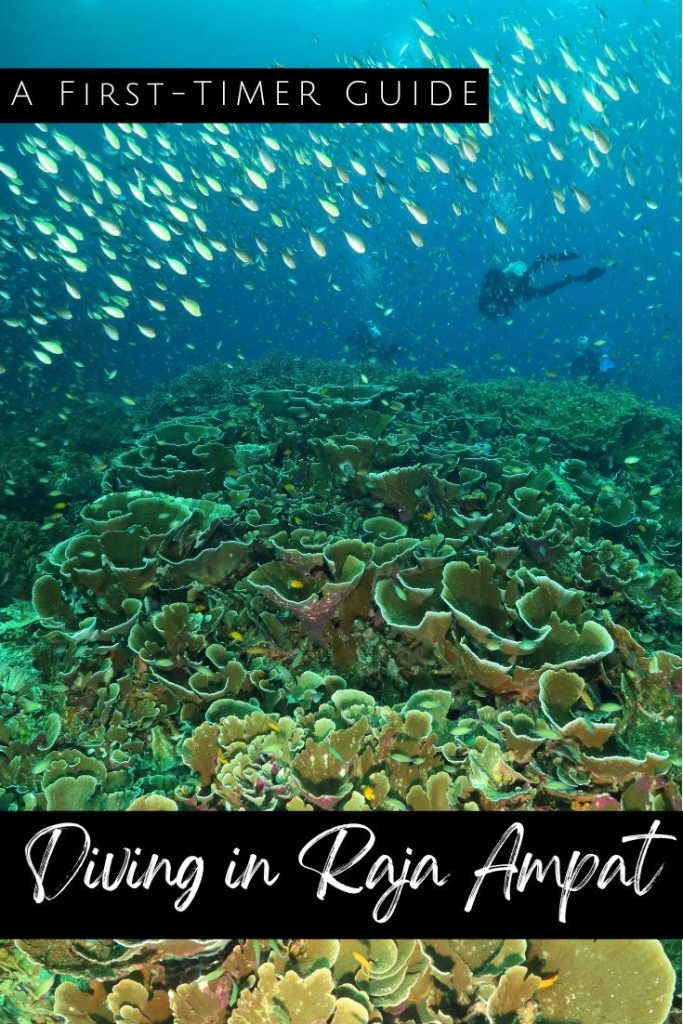
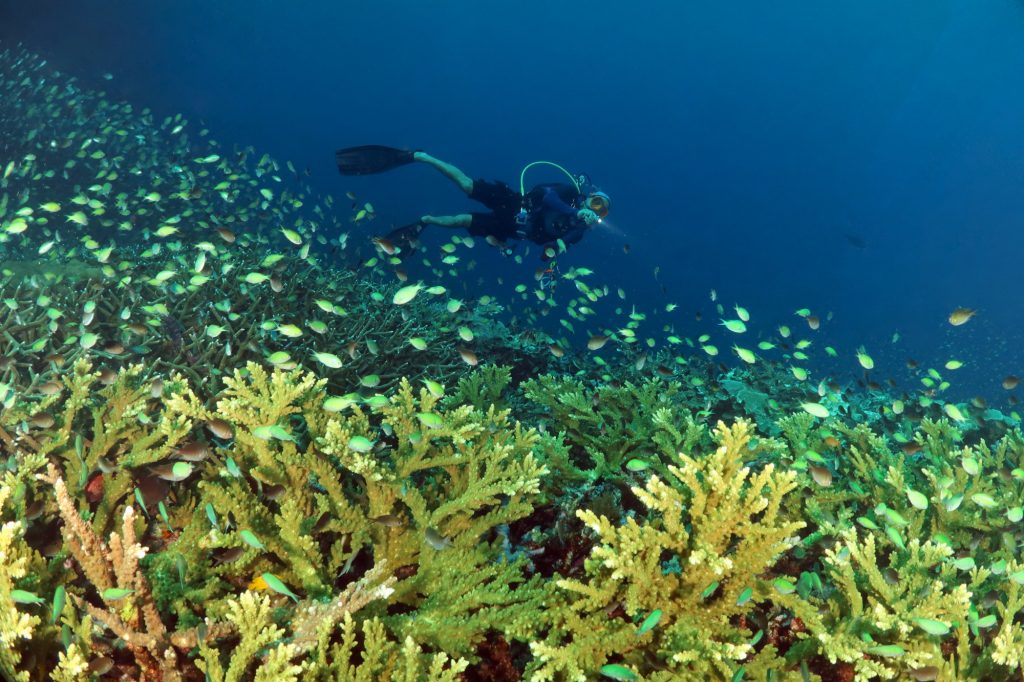
Melissa’s Garden feels like a pause for all scuba divers exploring Raja Ampat. The dive isn’t about depth or action; it’s marvelling at what a healthy, pristine coral garden looks like. You descend onto a broad, calm plateau where acropora spreads in every direction, with colours shifting between brown, blue, purple and green, and you suddenly realise how rare it has become to see hard coral coverage like this in genuinely good shape. That contrast is exactly why the Fam Islands matter in a first itinerary: they remind you that Raja Ampat isn’t only about sharks, mantas, and currents, it’s also about reef health, and the quiet kind of beauty that doesn’t need chaos to be impressive.
Depth stays moderate (around 5–20 metres, depending on tides), and currents are usually non-existent to manageable, which is why it’s often presented as the “easy classic” for first-timers. The real challenge here, though, isn’t current: it’s responsibility. The reef is shallow, dense, and fragile. If your buoyancy and trim aren’t solid yet, stay higher, keep your distance, and don’t cross over blindly. If you can learn and practice frog kicking with your fins before your trip.


My dive parameters
28/11/2025 – 21 m – 77 min – 30°C
Misool
Misool is often described as the crown jewel of Raja Ampat. It sits at the southern end of Raja Ampat and feels like a different world. Misool is also strongly associated with high-end eco-resorts next to pristine reefs: that reputation isn’t just marketing. One of the reasons marine conservation works so well here is practical: a luxury eco-resort has agreements to financially compensate local fishermen for not fishing in two specific areas, and liveaboards operate under strict scheduling, so a site isn’t crowded by multiple operators at once. Underwater, it is obvious that it works.
For first-timers, the key is to understand that Misool is a more isolated area of Raja Ampat and can even be a separate trip. There are no independent local dive centres like you find around the Dampier Strait; diving here is mainly through liveaboards or resort-based operations, and reaching it independently is logistically heavier than bouncing between the central islands. That’s why my recommendation is simple: if you want to do it, like me, to have an overview of what Raja Ampat has to offer, book a liveaboard with Misool on the itinerary (usually only available in the dry season, from November to April). Otherwise, prioritise Dampier and Arborek before Misool.
Barracuda Point
To be honest, my very first dives in Misool were not explosive. Despite its name, I didn’t get to see dramatic barracuda action (I only saw one great barracuda, who seemed a bit lost on his own). The site has small caverns and areas where currents can build up, attracting schooling trevally, but the coral structure was less dense than what I later experienced.
My dive parameters
31 m – 61 min – 30°C
Four Kings
This is where I finally got the full Misool experience. It was one of the most impressive dives of my trip: Sharp pinnacles rising from the depths, large gorgonian bouquets hanging dramatically, schooling anchovies forming living clouds as giant trevally hunted through them. Other divers found pygmy seahorses on that dive, but I stayed fully committed to wide-angle, trying to capture the scale of the reef rather than switching lenses mid-dive.
My dive parameters
32 m – 62 min – 30°C


Anchovies
This dive site lived up to its name more than Barracuda Point did. Silver liners formed moving curtains in mid-water, and trevally and jackfish cut through them repeatedly. A large Napoleon wrasse passed by in the blue, turtles cruised through the scene, and despite lower visibility, the fish action compensated.
My dive parameters
30 m – 62 min – 30°C
Eagle’s Nest
My buddy team was the first in the water that morning at 7 am sharp. We searched for mantas for nearly half an hour without success, which is part of the reality of diving here. However, I absolutely loved crossing over in the blue from the main pinnacle to the shores of Misool among batfish, barracudas and trevally. What we did find instead was the largest wobbegong shark of my trip.
My dive parameters
18 m – 64 min – 30°C


Gus Ridge
Gus Ridge was visually striking, with dense gorgonian bouquets and schools of batfish weaving through trevally and barracudas, while the current was present but manageable. But mantas were still not there; we were definitely too early in the season.
My dive parameters
27 m – 52 min – 30°C
Yilliet Kecil
Macro underwater photography along walls in currents is not easy, but here it was the best opportunity to spend more time closer to the reef. A pygmy seahorse, a peacock mantis shrimp and a reticulated chromodoris were the highlights of my only critter treasure hunt in Misool.
My dive parameters
23 m – 64 min – 30°C


When is the best season to go diving in Raja Ampat?

You can dive Raja Ampat year-round, but conditions change depending on season, area, and what you want to see. The first thing to remember is that Raja Ampat’s seasons (dry and rainy) are basically reversed compared to Bali. November to April is generally the calmer period, especially in the south, which matters if Misool is on your itinerary. This is when most liveaboards can run full routes combining Misool and Central Raja Ampat (Dampier Strait). Between May and September (rainy season), winds tend to be stronger and sea conditions rougher, which can make Misool more exposed, so liveaboards usually don’t go south during this period. They will focus more on the central and northern areas (Dampier Strait, Waigeo, Kri, Gam), which remain diveable because they’re more sheltered.
Visibility is not a straightforward “dry season = clear water” situation. More wind often means more plankton, which can reduce visibility but increase pelagic activity — especially manta encounters. If mantas are a priority, slightly greener water can actually be a good sign. If you’re a wide-angle photographer chasing ultra-clear blue scenes, you may prefer periods with lower plankton, but even then, nothing is guaranteed. During my late November to mid-December trip, visibility varied from average to excellent within the same week, and manta sightings went from zero early on to multiple encounters later. Local guides also mentioned that peak manta timing has shifted in recent years, with February often considered a strong month.
From a practical planning perspective, crowds and pricing matter too. December to February overlaps with European winter holidays and tends to book out early for liveaboards, resorts and the best homestays. If budget is important, May and June can offer better deals without sacrificing dive quality, as long as you accept the possibility of rougher seas and more limited itineraries. Finally, keep an eye on non-seasonal factors: parts of northern Raja Ampat (including Wayag) are currently temporarily restricted due to local protests related to mining projects, so always verify current access if Wayag is a key goal. My simple recommendation: for a first trip with the broadest access and calmer seas, aim for November to April.
What to see underwater in Raja Ampat?

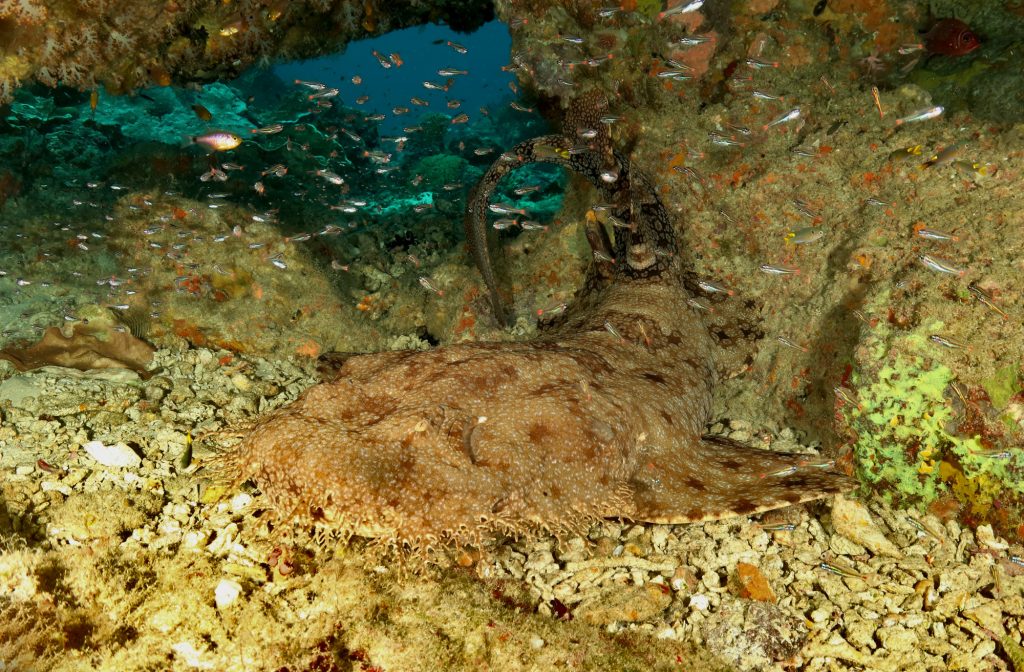
Raja Ampat’s marine biodiversity isn’t only a scientific fact, it’s also a feeling: constant movement and action, layers of fish at different depths, and dives where you can’t decide what to follow first. Over 3 weeks, a clear pattern emerged for me. Very few encounters were “once in a lifetime rare,” but the density of species across sites are what make Raja Ampat different. You’re not chasing one endemic marine animal; you’re diving inside an ecosystem that still functions at full volume. One note, though: Raja Ampat is not the ultimate macro destination. You’ll find interesting critters, but experienced macro photographers won’t be excited.
Here’s what you can realistically expect to see, grouped by category, based on what I personally recorded on my dives:
Sharks, rays and large pelagics
- Wobbegong sharks
- Blacktip reef sharks
- Whitetip reef sharks
- Reef manta rays
- Oceanic manta rays
- Mobula rays
- Spotted eagle rays
- Stingrays
- Great barracuda
- Giant trevally
- Tuna
- Hawksbill turtles


Reef fish
- Napoleon wrasse
- Bumphead parrotfish
- Ribbon sweetlips
- Yellow snappers
- Batfish
- Fusiliers
- Anthias
- Speckled carpetshark shark
- Crocodile fish
- Lionfish


Nudibranchs and other macro species
- Willan’s Chromodoris
- Much-desired Flabellinas
- Indian Caloria
- Heron ardeadoris
- Reticulated Chromodoris
- Peacock mantis shrimp
- Porcelain crab
- Coconut octopus
- Pygmy seahorse
What are the rules related to scuba diving in Raja Ampat?

Raja Ampat is a marine protected area with rules that are taken seriously, and you should treat them as part of the trip. If you dive with a diving liveaboard or a professional dive centre, they’ll usually handle the paperwork and brief you clearly. However, it’s still your responsibility to understand what you can and cannot do underwater. First, permits are mandatory. International visitors need both the marine park entry permit (TLPJL card) and the Raja Ampat visitor entry ticket, which was introduced in 2026. Together, that’s currently 1,700,000 IDR (about 87 €) for international divers. Dive operators typically arrange payment and collection for you, but if you travel independently, you must register and collect it yourself in Waisai. Rangers conduct regular checks on the water, so this is not optional.
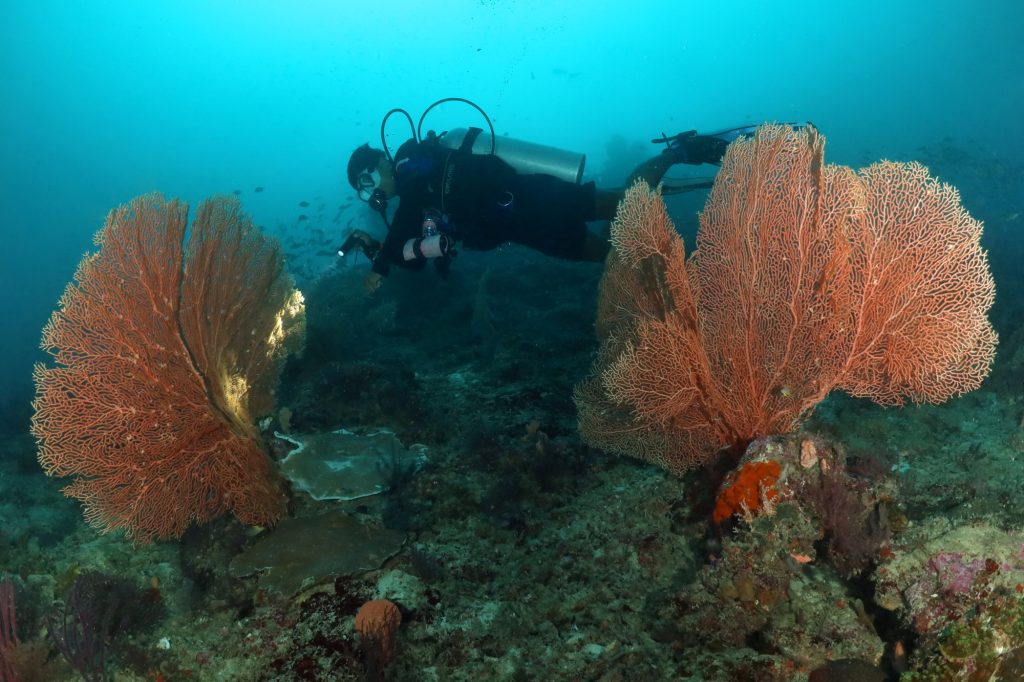
In the water, the basic principle is simple: no contact and no extraction. Gloves are prohibited because they encourage touching, and Raja Ampat is not a place to “learn the hard way” if you still rely on your hands to manage buoyancy in currents. Reef hooks are legal and widely used on high-current sites, but they are also one of the clearest signals of operator standards. Used correctly—only on dead rock or sand—they can reduce reef damage by preventing uncontrolled finning. Used as a shortcut for poor buoyancy or inexperience, they create the opposite outcome. Beyond that, it’s strictly prohibited to damage or remove coral, collect shells or any natural object, feed marine life, spearfish, or litter. Finally, remember Raja Ampat is a shark sanctuary, and protection extends to both manta species, sea turtles, and marine mammals. Harassment is illegal: no chasing for photos, no blocking cleaning stations, no crowding mantas at the surface.
Liveaboard vs island-hopping: what actually works

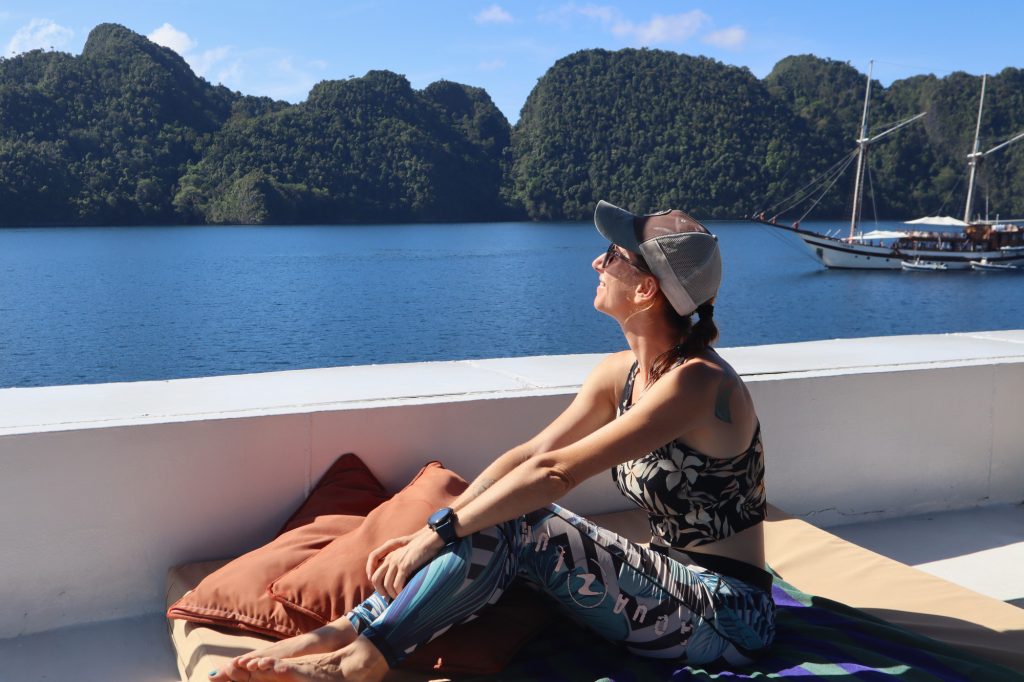
I did both on purpose: one week on a liveaboard, then ten days island-hopping between Arborek, Kri and Waigeo. If you’re a first-timer with limited time, my recommendation is clear: start with a liveaboard. It removes most of the logistical stress, it keeps you diving instead of negotiating transfers, and it lets you reach areas that are hard to piece together independently.
In one week on the Blue Manta of White Manta Diving, I covered Misool, the Fam Islands, Arborek, West Gam and the Dampier Strait. That is an enormous radius without spending serious money on boat crossing between islands, losing dive days, or relying on transfers that aren’t always comfortable or safe. Beyond coverage, a good liveaboard also structures your experience well: buddy teams are formed by level, dives are planned around tides, and the daily rhythm (three to four dives, meals built around it, proper camera space if you shoot) is designed to make intense dive weeks sustainable.


Island-hopping delivers something liveaboards can’t: time on the islands and direct contact with the Papuan village life. You get slow mornings, village walks, snorkelling whenever conditions allow, and sometimes more control over your budget. But you also accept variability. Service standards can swing drastically between homestays, maintenance can be inconsistent, and safety margins on longboat transfers are often lower than many travellers expect.
My experience reflected that range: Arborek felt community-driven and easy to enjoy; Gam felt wilder and more isolated; Kri felt more impacted by overtourism; and Waisai was functional but not charming. One homestay was warm and cosy; another was totally overrated, with staff who decided it was now okay to be plain rude, given the many tourists now. Reviews can quickly become outdated in Raja Ampat, making independent planning harder than in more established destinations. If you only island-hop, you may miss Misool and the Fam Islands. If you only do a liveaboard, you miss the human side of the archipelago. That’s why the best “first trip formula” I’ve found is simple: one week liveaboard + one week based on Arborek. It gives you range, reduces stress, and still lets you experience Raja Ampat with a 360-degree glimpse.
Can you visit Raja Ampat as a beginner scuba diver?

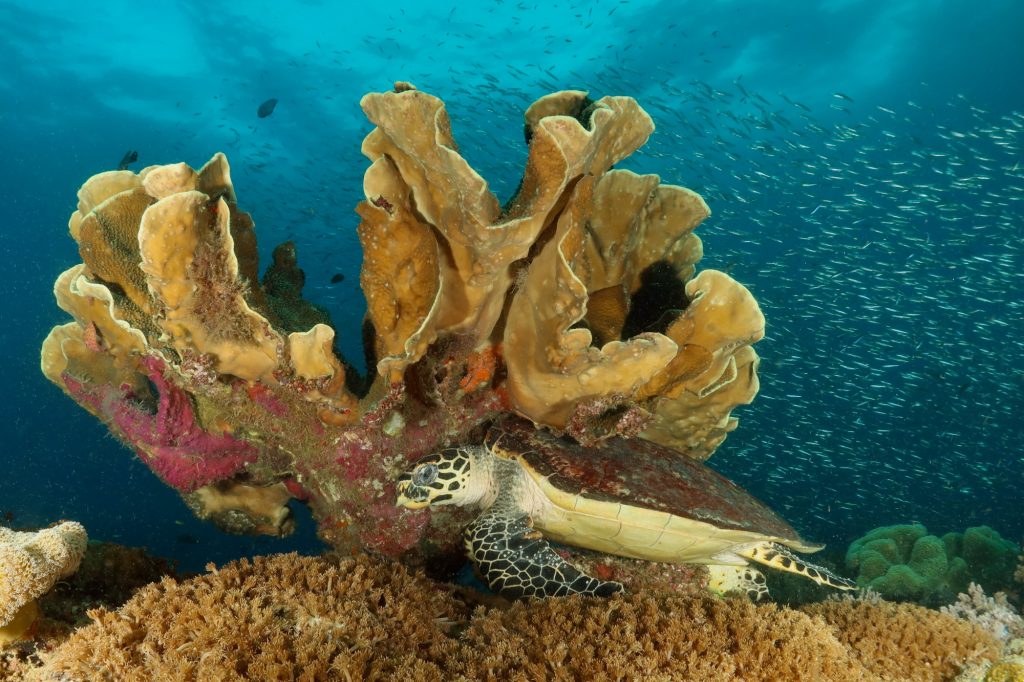
Raja Ampat is not categorically “advanced only” like the Galapagos, but currents can be strong, and they shape the entire experience. Some sites are genuinely beginner-friendly when conditions are normal: Manta Sandy (shallower and more sheltered than Manta Ridge), Melissa’s Garden, and the jetty dives (Arborek, Sawandarek, Yenbuba), where depth is moderate, the terrain is forgiving, and the structure gives useful visual reference points for buoyancy and orientation. A good operator can also split groups so newer divers stay on calmer sites while advanced divers go to stronger current locations on the same day. Done well, that makes Raja Ampat accessible to newer divers without compromising safety. Where it becomes complicated is on current-exposed sites like Blue Magic, Mayhem, Chicken Reef, and Sardine Reef, when the water is moving with tides rising or descending. Some dives may require negative entries and calm control while managing air consumption and efficient fin kicking.
If you have fewer than 10 dives, I don’t recommend Raja Ampat as your first “big trip,” and I wouldn’t choose it for an Open Water certification. There are better destinations in Indonesia to build a basic level of comfort first (Amed in Bali, Bunaken in Sulawesi, or the Gili Islands in Lombok). Advanced Open Water training can work here, and Divemaster training can be excellent — but only if you already have stable buoyancy. The key is not your certification card; it’s your ability to stay neutral buoyant in moving water without shooting up or panicking. If you know you still struggle with this, wait a little longer before coming. Raja Ampat is remote, and it’s the last place you want your first underwater stress episode.
What is the cost of diving in Raja Ampat?

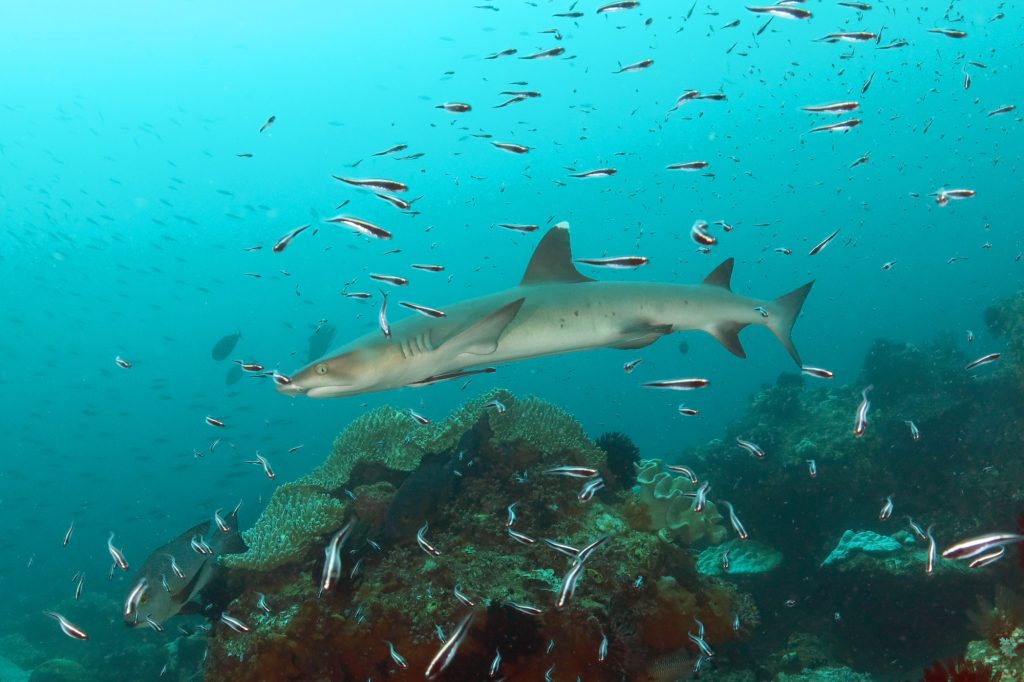
Raja Ampat is expensive for structural reasons: distance, isolation, and the fact that everything—fuel, food, tanks, spare parts, people—has to be transported over long sea routes. This is why it often gets compared to destinations like the Galapagos, not because the diving is the same, but because the logistics drive the budget. At the top end, an 8D/7N Raja Ampat cruise typically falls around €4,100–€5,700, which includes diving, accommodation, meals, and the efficiency of waking up already in the right area for four dives a day. On the other end of the spectrum, “budget” liveaboards do exist around €1,400–€1,900, usually with small basic cabins with bunk beds and itineraries focused mainly on the central area (Dampier Strait). Most travellers land in the middle: €2,300–€3,800 for 8D/7N, which is where my own trip sat with White Manta Diving—and for comfort, organisation, camera facilities, and coverage, it was excellent value relative to how much diving you actually get (20 in my case). Note, this is still way cheaper than the Galapagos, where you can easily double these budgets.
Land-based diving isn’t automatically cheaper; it just moves the costs around. In the Dampier area (Waigeo, Kri, Mansuar, Arborek), independent dive centres and resort-based operations typically charge per dive or per day trip. As a rough estimate for a two-dive day trip, prices commonly sit around 600,000–950,000 IDR (30-50€) per dive with rental gear, or 500,000–850,000 IDR (25-45€) per dive with your own gear, with extra charges for further dive sites. Resorts often package accommodation + meals + diving into bundles that can make island-stays feel something more expensive than diving liveaboards once you add transfers and daily diving. On top of diving costs, factor in mandatory conservation fees: international visitors currently pay a total of 1,700,000 IDR / 87 € (marine park permit + visitor ticket). Liveaboards and dive centres usually organise this for you; independent travellers need to handle it in Waisai.
How good is snorkelling in Raja Ampat?

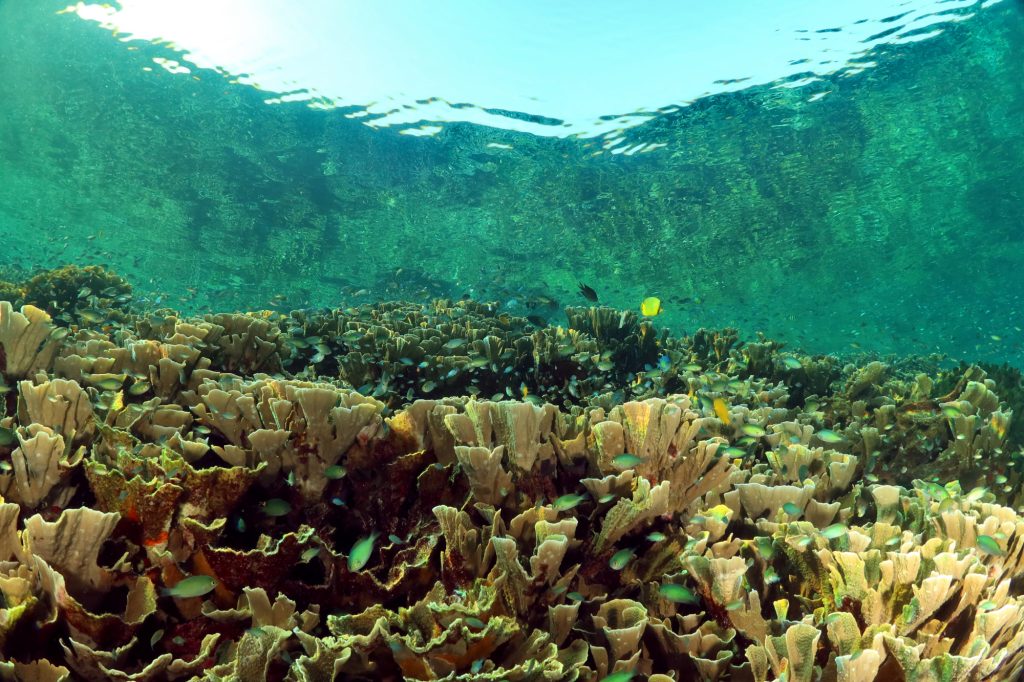
Snorkelling in Raja Ampat isn’t a consolation activity. In many areas, the best of the reef starts in the top 5 m: hard coral gardens, bommies, schools of snapper and sweetlips under jetties, and young blacktip sharks cruising through lagoons. If you’re travelling with a non-diver, taking a rest day, or trying to balance your budget, you can still experience a big part of Raja Ampat from the surface.
The most reliable snorkelling spots are the jetties and shallow reefs. Arborek Jetty is famous for a reason: dense fish life around the pillars, a gentle reef slope, and regular sightings of turtles, sweetlips, batfish, and even eagle rays sometimes. Sawandarek Jetty is another strong option, with healthy coral, large rose corals, and big schools of yellow snapper, often with calmer conditions near the structure. Melissa’s Garden can be snorkelled in good weather because the coral plateau sits shallow (around 5–10 metres). Around Kri, many homestays have surprisingly rich shallow coral gardens that can look better from above than deeper dives on a low-visibility day.


Snorkelling in Raja Ampat comes with the same non-negotiable reality as diving: currents shift fast, and safety standards vary. Homestays don’t always provide guidance or equipment, so if you’re not a confident swimmer and/or don’t know how to read a tide chart, choose accommodation that organises snorkelling trips from a boat rather than heading out alone. From a budget perspective, snorkelling is also one of the easiest ways to extend your stay: it reduces your trip costs without sacrificing the experience.
In all cases, be aware that Sunday (Church Day, as Papua is mostly Christian) is a no scuba diving day, so you’ll have at least one day during your trip where you’ll have to snorkel on your own instead of going scuba diving. For information, Sawandarek Village is Adventist, and Church Day is on Saturdays (which makes scuba diving possible on Sundays).
What to do beyond diving & snorkelling?

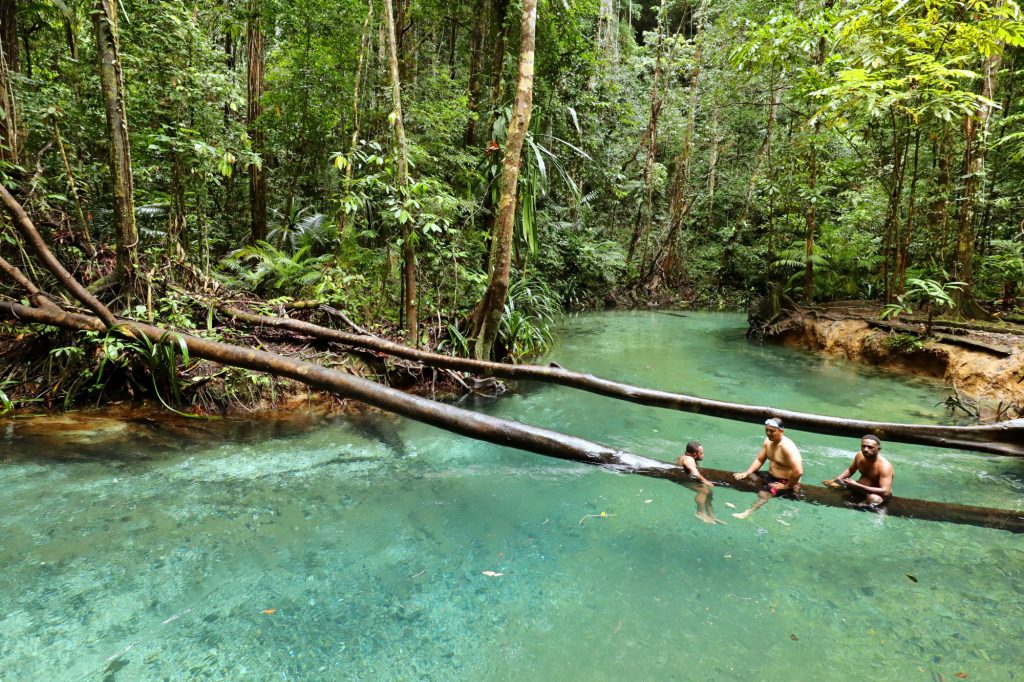
Raja Ampat is mainly about the ocean, but the landscape and villages above water add context and break up the “dive–eat–sleep” rhythm. Plan for extra time or even days between dives; these are side trips that actually feel worth the effort:
- Piaynemo viewpoint (Penemu, Fam Islands)
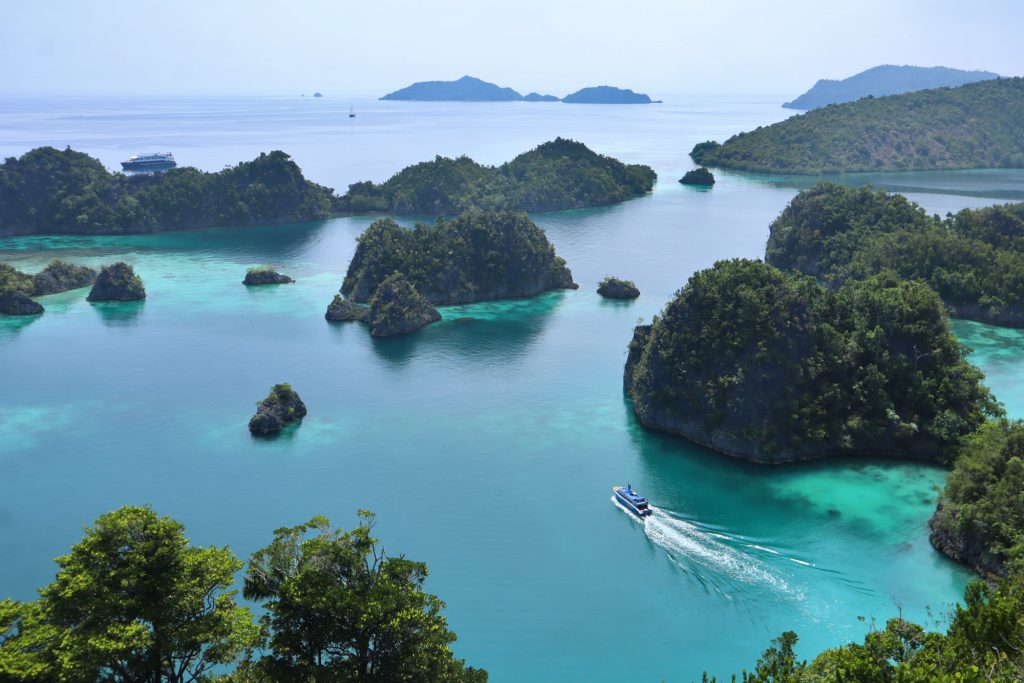
This is the classic Raja Ampat panorama: limestone karsts scattered over turquoise water. The climb is short but steep and humid, so it’s best done early, before day boats arrive in waves. What makes it worth it isn’t just the photo, it’s the perspective. From the top, the archipelago’s fragmented geography finally makes sense, and you understand why logistics are complex and why currents and sheltered coves vary so much from one area to the next.


- Kali Biru (Waigeo)
The “blue river” is an amazing inland break: an easy walk through the jungle to a narrow freshwater river with an intense, almost unreal, aigue-marine blue colour. It’s calm and cool, framed by dense vegetation, and it’s a good option on a rest day. However, you can totally make it an adventure if, like me, you rent a scooter in Waisai and hit the road to the East shore of Waigeo in an hour. I visited during high season and was on my own with my guides. I paid more as a result, as I couldn’t share the boat to cross the channel, but it was so worth it to appreciate this natural gem on my own.


- Visiting Papuan villages (Arborek, Yenbuba, Saporkren)
Spending time in villages adds the human context that most Raja Ampat itineraries skip. These are working communities, not staged cultural stops, and tourism sits alongside daily life rather than replacing it. Walk respectfully, greet people properly, and keep photos discreet. You’ll quickly see the contrast between the global “last paradise” narrative and the practical realities on the ground: basic infrastructure, variable waste management, and limited freshwater in some areas.


- Bird watching (Gam, Waigeo)
Papua’s biodiversity doesn’t stop at the shoreline, and one early morning in the forest makes that obvious. You can see hornbills, parrots, and the famous birds-of-paradise. I did one expedition from Waisai, leaving before dawn, to see the Wilson’s bird-of-paradise. After walking in the jungle for about an hour, we did see it! But too bad my 150 mm zoom lens broke earlier during my trip. I’ll try another spot on another trip to see the red bird-of-paradise (you need to go to different spots to see different species).
Where to stay to explore Raja Ampat?

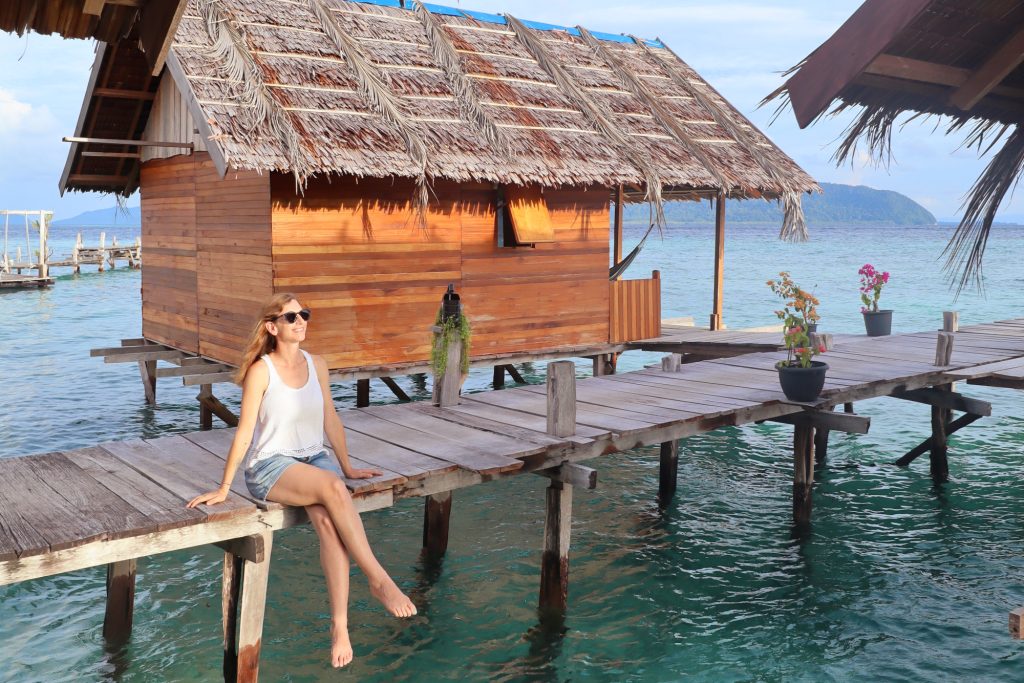
Where you stay in Raja Ampat will shape your entire trip. This is not a destination where you can improvise day by day. Your choice will determine everything from dive site access to daily rhythm, logistics and even the kind of community you meet.
Wherever you choose to stay, bear in mind these points:
- Plan ahead. The best homestays are fully booked months in advance, especially in high season, from December to March. Indeed, it is hard to go on a spontaneous trip to Raja Ampat, unless you get a last-minute deal on a liveaboard!
- Confirm transfers in advance. There is no transfer desk at the ferry terminal in Waisai; everything runs on local boats that must be coordinated at least the day before. Keep in mind the price is per boat, so if you’re a solo traveller, head to travellers forums and groups to find travel buddies with similar itineraries to share the cost. Besides, to ensure everything goes smoothly, buy an Indonesian SIM card (I recommend Telkomsel for Raja Ampat) to stay in touch with the homestay owners via WhatsApp.
- Confirm transfer conditions and boat type. Small boats can be tricky with heavy bags and scuba diving equipment. Ask about the price options between a long boat and a speed boat.
- Be clear about the safety standards you expect. Look at recent pictures of travellers to check whether boardwalks are maintained, whether there are guardrails, lighting, access ladders, and bathroom facilities, especially if travelling with children. Bear in mind that the cheapest homestays are unlikely to meet any safety and hygiene standards. So be ready to spend more if this is important to you.
- Staying longer in one base rather than hopping constantly will reward you. You get a better feel for reef and tide patterns, and you waste fewer days negotiating boats. The best alternative to this issue remains boarding a liveaboard.
Below are the options I experienced myself:
- Arborek for experience, community, good diving and real reef life.
- Kri is an optional base if you prioritise convenience and more opportunities to share transfers as a solo traveller.
- Waigeo works best as a logistical hub rather than a scenic base for your stay.
- Sorong remains a necessary layover before getting to Raja Ampat.
Arborek — my favourite base camp
For a first-timer who wants more than just diving, Arborek stands out. It has the friendliness of a working village — not staged, not sanitised, but well cared for. The reef in front of Arborek Jetty is reliably lively, and the night dive there was my most rewarding experience for macro critters in Raja Ampat. Wobbegong sharks, basket stars, walking sharks: many of the species you come here to see can be found in relative proximity to the village itself. The island is also a good strategic location at the centre of West Gam, Fam Islands and Mansuar, so the opportunity to go on day trips at the best cost is usually from Arborek if you don’t want to change islands all the time.
For independent travellers, homestays on Arborek vary in size and comfort. Still, with a bit of advance planning, you can find places offering meaningful interaction with the local community without sacrificing basic standards. If you want simple comforts, reliable transfers and the sense of living within a reef ecosystem rather than merely visiting it, this is as good a place as any. Note that learning a few words of Indonesian (Bahasa Indonesia) will dramatically enhance your experience on the island (I promise it’s not a difficult language).


I stayed at Sehati Homestay, and I loved it. It opened a couple of months before my visit, so I knew I’d have something in rather good shape. Being able to speak Indonesian definitely helped me, but overall, the hospitality was great, and we had varied food for breakfast, lunch and dinner (this is not a given across Raja Ampat homestays).
Kri — mixed feelings on the most popular island
Kri is often the default “diver base” for many travellers because it sits very close to Dampier Strait’s core sites and has a relatively high concentration of dive centres and homestays. If your primary objective is strictly diving, Kri offers good access. Solo travellers tend to prefer it because they have a better chance of sharing boat transfers with fellow travellers.
However, Kri never felt to me as settled as Arborek. The concentration of homestays around Kri’s western tip feels significantly busier and more impacted by tourism. It is not that the diving is worse (it isn’t), but the immediate environment felt crowded, and some eye sores started to appear. If you want convenience, quick boat runs, and multiple dive operators within walking distance, it’s a good option. But it lacked the quieter character of other bases, making Raja Ampat feel like Raja Ampat rather than just another busy tourist hub.


I cannot recommend a place to stay since I didn’t like the one I booked. I have started shortlisting a couple for a future trip because I also understand that Kri is a rather big island with, it seems, better options on the opposite side. At least, you can already scrap the western tip of Kri from your options.
Waigeo — convenient but lacks charm
Waigeo is often the default base if you want convenience above all else. The ferry lands there. Transfers to other islands are easier to arrange. There are proper shops, banks and a sense of urban life that stands in contrast to the simple island life of Arborek or Gam. Logistically, Waigeo is hard to beat. But as a place to stay, it is not what most travellers come to Raja Ampat for. The town feels like an industrial harbour rather than a scenic island destination.
Many people use Waigeo as their arrival point, then transit to smaller islands for their actual stay. It is, however, a good base for exploring the Blue River, going on a bird-watching tour, and having a look at its Turtle-shaped Cathedral. Note that it is possible to go diving in Raja Ampat directly from Waisai (especially Friwen, Mioskon, and Blue Magic), but it tends to be more expensive because the boat ride is longer.


I stayed at Riffalda Cottages, a spacious bungalow, very clean, but with no hot water; a fridge, a hot water dispenser, and plenty of space on the terrace to repack my scuba diving gear before taking the ferry back to Sorong. The owner was lovely and helped me arrange my scooter, my taxi, and even my bird-watching tour at dawn to see one species of bird of paradise.
Sorong – a necessary logistical layover
Let’s get things straight, like most big cities in Indonesia, you’re not in for a charming stay in Sorong. However, I strongly recommend booking a night at the beginning and another at the end to avoid unnecessary stress from potential flight delays.
If you’re wondering what there is to do in Sorong, I tried a bit of everything, but the true highlight was my visit to the Pasar Remu (traditional market). You’ll see people from all over Papua coming to sell their fruits and vegetables -some I had never seen anywhere else in Indonesia – and with a few words of Indonesian, I had a blast chit-chatting while stocking up on supplies for the islands. You can easily spend 2 hours there, then relax by the hotel pool. While you can skip the Buddhist pagoda, spend your time instead getting supplies you won’t find on the islands at the Saga supermarket, which is really well stocked, including a nice bakery.


My go-to place in Sorong? The Swiss-Belhotel is ideally located near the ferry harbour, halfway between the airport and the city centre. They have everything you need: a modern, clean room, a fantastic view above Sorong and the islands of Raja Ampat on the horizon, a decent-sized swimming pool to get a few laps before going diving, and a café with delicious Indonesian and International food options.
Do you need more information to plan a dive trip to Indonesia?
Check these additional articles about travelling and scuba diving in Indonesia:
PIN IT FOR LATER