

If you arrived here, it means you are probably ready to start planning your adventurous trip to Okinawa. The subtropical archipelago belongs to Japan and stretches in the south of the country from Kyushu to Taiwan. There, coral reefs replace the neon skylines of Tokyo or Osaka. Okinawa is the perfect addition for those who want to explore a different version of Japan during their trip. It is far more relaxed and also far less known to international visitors.
Made up of more than 160 islands, the Okinawa prefecture counts 5 main islands: Okinawa Honto, Miyako, Ishigaki, Iriomote and Yonaguni. Each has its own rhythm and underwater treasures. From diving with manta rays in Ishigaki to drifting alongside hammerhead sharks in Yonaguni, Okinawa is one of the most beautiful diving destinations in Asia. Yet, it remains one of the most overlooked by international travellers, as the language barrier can make organising a trip there a tad more complicated. Let me show you how and what to take into account so you can include diving in Okinawa in the fun things to do in Japan while travelling there.
My top tips to travel smarter to Okinawa


The easiest and cheapest way to get to Okinawa
Reaching Okinawa is easier than most people imagine. From Japan’s main islands, daily flights connect Tokyo, Osaka, and 12 other large cities to Naha Airport on Okinawa Honto (Okinawa main island) in 2 hours on average (only Sapporo, on the northern island of Hokkaido, is over 3 hours).
If you’re travelling from other parts of Asia, Okinawa is also surprisingly well-connected. There are direct flights from major regional hubs such as Singapore, Bangkok, Seoul, Hong Kong and Taipei to Naha International Airport. Ishigaki also has an international airport with connections to Taipei, Hong Kong, and Seoul.
A return ticket to fly direct to Okinawa starts from:
- 110 USD from Osaka
- 130 USD from Tokyo
- 400 USD from Taiwan or Hong Kong
- 900 USD from Singapore
For divers and travellers coming from Europe, Australia, or the Americas, the best strategy is to connect via Japan’s main international airports, as they offer direct flights to many countries. Once in Japan, foreign visitors with a tourist visa and an international return flight ticket can get special domestic fares with the ANA Discover Japan fare or the JAL Explorer Pass.
Note that it is possible to reach Okinawa Honto from the south of Kyushu after crossing Japan in a high-speed train (Shinkansen). From Kagoshima, you can take a ferry to Naha in 25 hours via the Amami Islands. Learn more about how to get to Okinawa from different places worldwide, including the main airlines serving the destinations and alternative routes, which can help secure better deals.
The best season to visit Okinawa away from the crowds
Okinawa’s subtropical climate means it can be visited year-round, but some months are definitely better than others. Having dived there three times (in June, February–March, and October), I’ve had the chance to explore Okinawa through different seasons. Water temperatures range from 20°C in the coldest winter months to 30°C in the summer.
However, the summer is also when typhoons mainly affect Okinawa. It usually runs from June to September, with August and September as the peak months. It’s important to understand that it is not always stormy or rainy during that time, but the occurrence is more frequent. Be sure to monitor the weather both before and during your trip. Needless to say, boat trips and scuba diving trips are cancelled whenever a typhoon is approaching.
If you prefer the livelier side of Okinawa, plan your trip during the Japanese summer holidays, when the island is alive with matsuri (festivals). But if you want to avoid soaring prices and overcrowding, avoid peak national holidays such as Golden Week (late April–early May), Obon (early August), Silver Week (September), and Chinese New Year.
How to explore the islands efficiently
If you wonder how to get around Okinawa during your trip, you have to decide first which islands you want to visit and then understand what is available for each. For instance, Okinawa Honto and Ishigaki have bus networks, and Naha, the capital of Okinawa, has a monorail line on top of that. There are ferries between the islands, but not all the islands, especially Miyako Island.
Okinawa isn’t just one island — it’s a long chain of islands stretching over 1,000 km, from the main island down to Yonaguni near Taiwan. For first-timers, I recommend starting on the main island to get a taste of Okinawa’s culture and beaches, then take a short ferry ride to explore the Kerama Islands National Park, especially Tokashiki.
If you have more time, you can take a short flight from Naha to explore Ishigaki. From Ishigaki, you are a short ferry ride away from many beautiful islands, such as Taketomi. The slow travellers among us can extend to Yonaguni by ferry from Ishigaki. It takes 4 hours, but it is also possible to fly from Ishigaki or Naha to Yonaguni. Note there are no ferries at all between Okinawa Honto and Miyako, or Miyako and Ishigaki.
Renting a car is an excellent option for exploring beyond your resort or dive centre, especially on Okinawa Honto, Ishigaki, and Yonaguni. Roads are well-maintained, driving is on the left, and distances are short enough to make road-tripping very enjoyable. Unfortunately, most countries’ international driving licences don’t work in Japan; you need to get an official translation online from the Japanese Automobile Federation for a fee.
Book a place to stay that matches your preferences and budget

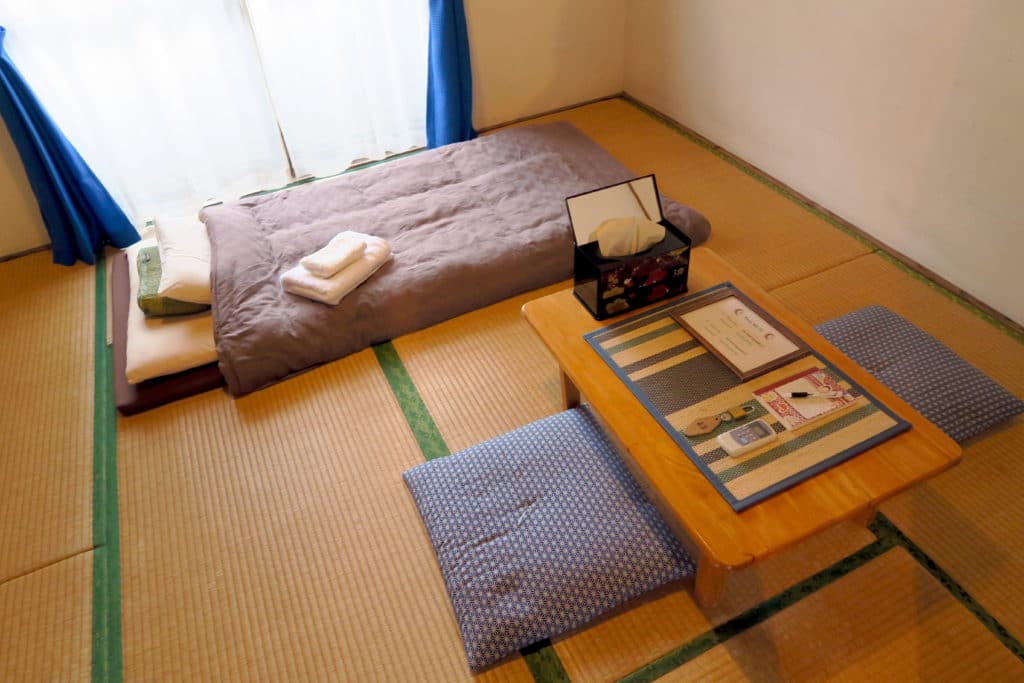
Best areas to stay based on your preferences
Choosing where to stay in Okinawa depends on what kind of experience you’re after — beach, diving, or local culture. My favourite spots in Okinawa as a scuba diver are the Kerama Islands, Ishigaki and Yonaguni. However, Naha, Onna and Taketomi are also excellent options for both divers and non-divers. Here is what to expect from each place:
- Naha is the main gateway on Okinawa’s main island and an excellent base for first-time visitors. It’s lively, with good food, shopping, and easy access to the Kerama Islands for day-trip diving.
- Onna, on the west coast, offers more resort-style stays and easy access to beaches and dive centres. It’s great for both scuba divers and snorkelers, with many shore dive sites available or just a 5-minute boat ride away.
- Kerama Islands (Tokashiki, Aka & Zamami) are just half an hour to an hour away by ferry from Naha. These islands are small and peaceful, with family-run guesthouses and crystal-clear water steps away. The best for scuba divers is Tokashiki, while Zamani is best for snorkellers.
- Yaeyama Islands (Ishigaki, Taketomi, Iriomote & Yonaguni) are a diver’s dream. Ishigaki is famous for its manta ray encounters and easy day trips to the nearby charming island of Taketomi or the jungle island of Iriomote. Yonaguni, on the other hand, is more remote and ideal for experienced divers looking to explore its mysterious underwater ruins and swim with hammerhead sharks.
Accommodation in Okinawa is more affordable than you think
While Japan has a reputation for being expensive, Okinawa is refreshingly affordable. If you’re travelling during off-season (November to March), you’ll find even better deals, sometimes half the summer prices.
Mid-range hotels in Naha or Onna start at around 70 to 100 USD per night for a double room, while guesthouses or minshuku (local homestays) on smaller islands range from 40 to 60 USD. On Ishigaki, expect to pay between 60 and 120 USD depending on comfort level and proximity to the beach. In Yonaguni, the offer is more limited, but prices remain reasonable.
Top tips for scuba divers going to Okinawa


Okinawa’s diving is diverse, colourful, and rewarding for all levels. The coral reefs are healthy, visibility often exceeds 30 metres, and the marine life ranges from tiny nudibranchs to massive pelagic species.
Among all the places I’ve dived, the Kerama Islands hold a special place in my heart. The water there is so clear it feels like flying. Expect brightly coloured coral gardens, turtles everywhere and relaxed drift dives. It’s a great spot for beginner divers, but also for underwater photographers.
My second favourite is Ishigaki, where I’ve had magical encounters with manta rays and spent hours searching for macro species, including many colourful nudibranchs. Currents can be a bit stronger around Ishigaki, so some dives require a bit more experience, but dive centres have plenty of options for beginners too.
And then there’s Yonaguni — a place that feels almost mystical. I went there for the famous hammerhead migration and the mysterious underwater ruins, which many believe to be remnants of a lost civilisation. The dives can be challenging, with strong currents and deep descents, but they’re truly unforgettable. It is usually recommended to be a minimum Advanced Open Water diver with 100 logged dives.
As a subtropical region of Japan, you can dive all year round in Okinawa. The water temperature is 20°C at its coldest during wintertime in Okinawa Honto, but 24°C in Ishigaki and Yonaguni, which are much farther south. If you prefer warm waters, the water temperature reaches 30°C in the summer all over the archipelago. The summer is also when the best visibility is reached (30 m or more).
Note Okinawa is seasonally subject to strong typhoons in June and September. As a rule of thumb, October is the best period to go scuba diving in Okinawa: the water is still warm, you avoid the crowds and typhoons usually are gone. That said, if your goal is to dive with hammerhead sharks in Yonaguni, you’ll want to visit in February or March. Just keep in mind that while the diving is spectacular, beaches and resorts may be closed or quieter since it’s technically off-season.
Do you need more information to plan your dive trip to Okinawa?
Check these additional articles about travelling and scuba diving in Okinawa: