

You’ve made it to Okinawa – Japan’s southernmost prefecture and a subtropical archipelago stretching over 1,000 kilometres from Kyushu almost to Taiwan. With more than 160 islands to explore, getting around Okinawa is part of the adventure. When planning a trip to Okinawa, it helps to start with Okinawa Honto (“Main Island”), the gateway for most visitors.
Public transportation is well developed around Naha, the capital city, on Okinawa Honto up to Onna, and in the south of Ishigaki-jima (jima means “island”). At the same time, ferries and short flights connect the islands across the prefecture. Each island has its own way of getting around – from rental cars on Okinawa Honto and Ishigaki-jima, to bicycles or even traditional buffalo wagons on Taketomi-jima. Knowing how to get around Okinawa helps you plan your route efficiently and make the most of your time both above and below the surface.
Using public transportation: my favourite option


When I first started diving in Okinawa, I thought getting from one island to another might be complicated – but it turned out to be much easier than expected. Whether on land or on the sea, public transportation in Okinawa is reliable, clean, and pleasant. It’s a great option if you want to travel light, keep your costs low, and enjoy the journey between dives rather than just rushing from one site to the next.
Most visitors start in Naha, where public transport is readily available. The “Yui Rail”, Okinawa’s only monorail, runs straight from the airport through downtown Naha to Shuri. It’s efficient, affordable, and perfect for exploring the city or catching a ferry to the Kerama Islands. From there, an extensive bus network connects major towns and beach areas up the western coast as far as Onna and Nago. From the harbour of Naha, you can reach the islands of the Kerama National Park by ferry. The closest one, Tokashiki, is only 35 minutes away.
In Okinawa, renting a car can be helpful but only in certain places. On Okinawa Honto, it makes sense if you want to explore the coastal areas north of Naha, such as Onna, Motobu, or Cape Manzamo, where buses become less frequent. However, the left-side traffic in and around Naha itself can be hectic, and parking can be limited, so I usually avoid driving in the city altogether. If you’re diving with local operators in Naha, most shops offer hotel pick-ups, so a car isn’t essential for diving days. In Ishigaki, buses and ferries make getting around equally straightforward, with short hops to Taketomi or Iriomote. However, to go around the north of Ishigaki or around the island of Yonaguni, you will need a car. Renting a bicycle is also a great option on the smallest islands that tend to be flat; Taketomi Island was ideal for this, for instance.
Public transportation

Here are the different options of public transportation you can use while travelling across the Okinawa Archipelago:
- Monorail: The Yui Rail is the easiest way to get around Naha. It connects Naha Airport directly with the city centre and runs all the way to Shuri, the former royal capital. It’s clean, punctual, and offers great views of the city from above street level – especially when the sun dips over the East China Sea. Trains run every few minutes from early morning to around midnight, and fares range from ¥230 to ¥370 (1-2 €) depending on distance. Day passes (¥800 / 4€) or two-day passes (¥1,400 / 7.50€) are perfect if you plan to explore several stops, from Makishi Market to the ferry terminals.
- Bus: Buses cover much of Okinawa Honto, making them a good option for reaching beaches outside the city. The routes between Naha, Chatan, and Onna Village are reliable, though once you travel farther north, schedules become less frequent. Fares are distance-based and usually paid when you get off – keep small change handy or use a prepaid OKICA card, which works on both buses and the monorail. On the outer islands, such as Ishigaki, a small but efficient bus network runs mainly in the southern part of the island, serving ports and dive centres.
- Ferry: Ferries are an essential part of travelling in Okinawa and often a highlight of the trip. From Naha’s Tomari Port, regular ferries connect to the Kerama Islands National Park, especially Tokashiki, Zamami, and Aka – all known for clear water and thriving reefs. These routes are reliable year-round, though they can be cancelled in typhoon season (June–September). From Ishigaki Island, ferries link to Taketomi, Iriomote, and Yonaguni islands. It’s important to note that there are no ferries between Okinawa Honto and Miyako, and no ferries between Miyako and Ishigaki, so flying is the only practical way to move between them.
- Regional flight: With the islands spread over such a long distance, domestic flights are often the fastest way to travel between the main islands. There are multiple daily connections from Naha to Miyako, Ishigaki, and Yonaguni, and onward links between Ishigaki and other Yaeyama Islands. Flights are short (30–60 minutes) and scenic. If you’re planning to dive across several islands, you need to keep an eye on your no-flight time after diving.
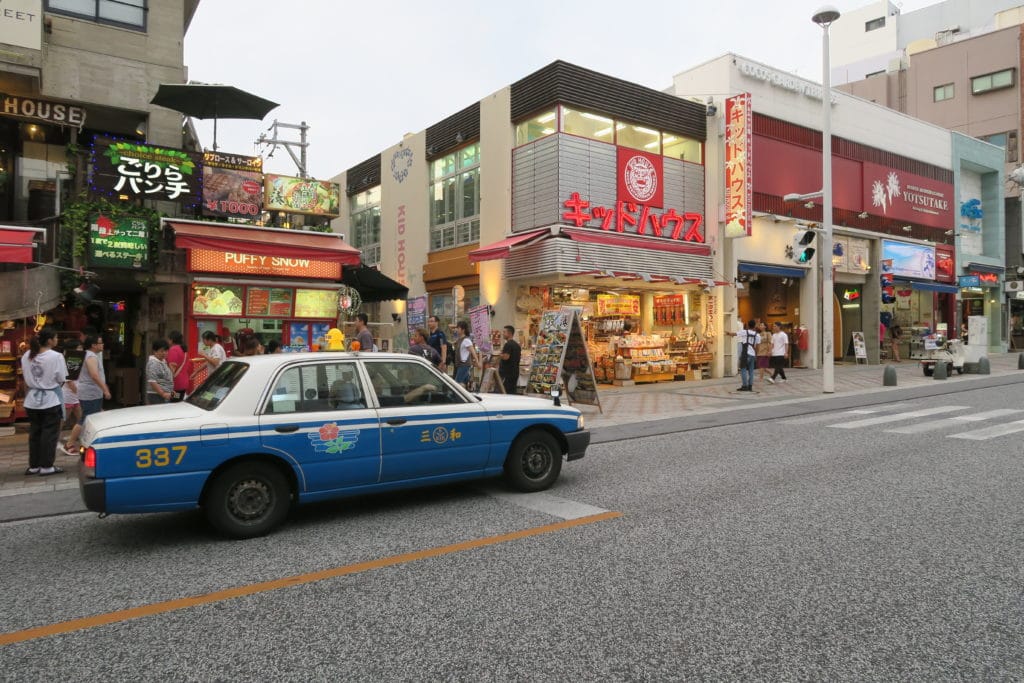
- Taxi and ride-hailing app: Taxis in Okinawa are clean, metered, and easy to hail, especially in Naha and around major resorts. They’re pricier than buses but can be convenient if you’re carrying dive gear or travelling late at night when buses stop running. To hail a driver with a tap on your smartphone, the best local apps in Japan are GO and DiDi. Note it will mostly work around urban areas.
Renting a car (or a bicycle!)


Having your own car gives you the freedom to explore at your own pace. Roads on Ishigaki and Yonaguni are in excellent condition, and the coastal drives are beautiful and stress-free. Renting a car is truly a memorable experience on Ishigaki Island if you’re planning to visit the quieter northern beaches and scenic Kabira Bay. Yonaguni Island might be tiny (it only takes 45 minutes to drive around it), but it would be a pity to miss touring its most iconic landscapes of jaw-dropping cliffs and horses grazing in lush green prairies.
However, I had a mixed feeling experience of driving on the main island of Okinawa (Okinawa Honto). There is a stark difference in traffic between the South-East and the North-West areas, with the latter much more enjoyable. While on a mission to visit the Gyoku Sendo Cave (with some other sites of the south coast), I sat for hours in traffic on ugly roads and regretted either not taking the car at all or not driving all the way to the quieter Yenbaru National Park, in the north of the island.
Just remember: Japan drives on the left and doesn’t recognise most international driving permits issued under the 1968 Vienna Convention. Instead, you’ll need an official translation of your driver’s license, issued by the Japan Automobile Federation (JAF) or your country’s embassy in Japan. Without it, car rental companies cannot legally rent you a vehicle.
If driving a car in Japan sounds too complicated to you, I have good news. More than a few places offer affordable bicycle rentals across the Okinawa Archipelago! Not everywhere is a good place for it, but I loved riding a bicycle on Zamami and Taketomi islands. I did it too on Ishigaki Island to explore the South-West area; however, one demanding slope turned the adventure into a full workout. Yet, I loved my 18 km tour that day, which took me from Ishigaki City to Sunset via Fusaki Beach. I got amazing views and no one around!
Getting around Okinawa from Naha


Getting around Okinawa from Naha is straightforward once you know how the island network works. As the central transport hub of Okinawa Honto, Naha connects the entire prefecture by air and sea – from the nearby Kerama Islands National Park to the more remote island groups of Miyako and Yaeyama. While ferries are a great way to reach the closer islands, longer distances between island groups are covered by short domestic flights.
- To/From Tokashiki Island: From Naha’s Tomari Port, ferries run daily to Tokashiki in the Kerama Shotō National Park. The high-speed boat takes about 35 minutes, while the slower ferry takes just over an hour. Tokashiki is perfect for a day or overnight diving trip, with crystal-clear water and abundant coral. Bookings are recommended, especially in summer, and weather can affect sailings during typhoon season (June–September).
- To/From Kerama Islands: Ferries to Zamami and Aka also depart from Tomari Port, with a high-speed connection taking around 50 minutes. Both islands are compact, easy to explore, and home to some of the best visibility in Japan. Many divers choose to spend a few nights here – most guesthouses can arrange pickup from the ferry terminal.
- To/From Miyako Island: The Miyako Islands, located roughly halfway between Okinawa Honto and the Yaeyama group, are accessible only by plane. Several daily flights from Naha Airport reach Miyako Airport in just under an hour. Miyako is known for its dramatic underwater arches and caves, and nearby smaller islands like Ikema and Irabu are connected by bridges, making it easy to explore by car once you arrive.
- To/From Ishigaki Island: Ishigaki is another one-hour flight from Naha and serves as the gateway to the Yaeyama Islands. From here, frequent ferries connect to Taketomi, Kohama, and Iriomote, making island-hopping simple. Ishigaki itself is a world-class diving destination – home to manta cleaning stations and vibrant reefs – and an excellent base for exploring the southern islands.
- To/From Taketomi Island: A short 10-minute ferry ride from Ishigaki Port takes you to Taketomi, a peaceful, car-free island where traditional Ryukyu houses line sandy streets. Most visitors explore by bicycle or buffalo cart, making it a relaxing half-day trip between dives.
- To/From Yonaguni Island: Yonaguni, Japan’s westernmost island, is famous for its schooling hammerhead sharks (best season is from February to March) and the mysterious “Yonaguni Monument.” It’s reachable by a 1-hour flight from Ishigaki or a 2-hour flight from Naha. There’s also a long ferry crossing from Ishigaki (around 4 hours), but it’s weather-dependent and can be cancelled due to rough seas during typhoon season.
Do you need more information to plan your dive trip to Okinawa?
Check these additional articles about travelling and scuba diving in Okinawa: