This post may contain affiliate links. It means I may earn a commission if you book or purchase something. This is at no cost to you and support this website. Learn more here.
Knowing that Malta is one of the most touristic places in Southern Europe, I didn’t want to limit my experience to a seaside resort town, even if the primary purpose of my 10-day holiday in the Mediterranean archipelago was scuba diving. I love exploring cities as they are usually full of history and culture. I decided that a relaxing weekend in Valletta, the smallest capital city in Europe, right after landing at Luqa Airport, was the best way to start my summer holiday.
While planning my trip to Malta, I wondered if it would be possible to visit Valletta in only 24 hours. It is, but during my stay, I realised that Valletta is strongly connected to Sliema and the Three Cities. These places are worth a visit, and it would be too much to see them in just one day after discovering Valletta’s treasures. Here is a 2-day itinerary to discover the city of Valletta and its neighbouring towns.
After this relaxing weekend full of discoveries about Malta’s history, I was fully ready for an exciting week to go diving in Malta. Malta revealed to be a top wreck diving destination in Europe, while the bucolic island of Gozo surprised me with some of the best cavern diving I’ve seen.
The itinerary of my weekend in Valletta
Here is my 2-day itinerary to explore the city of Valetta, Sliema and the Three Cities. Put on some comfortable shoes as you’ll walk around everywhere!
Day 1 – morning – walking Valletta’s fortified wall


Valletta (Il-Belt in Maltese, which means the City) is the smallest capital city in Europe. It was built as a walled city on a peninsula, easy to defend with a deep natural harbour. Walking around its thick ancient walls is an excellent way to start the discovery of the Capital of Malta.
What better way to start the day than learning through the best museum in town about the history of Valletta and, hence, Malta? This way, all your subsequent discoveries will make so much more sense. Please don’t be stopped by its name (like I was at first glance), the Museum of War of Fort St Elmo (il-Forti Sant Lermu) is incredibly educational about the origins of the Knights of St John, how Malta became a part of the British Empire and what happened during WWII. Fort St Elmo is at the very tip of the Valletta Peninsula and offers a stunning view of the entrance of the harbour. The entrance is 10€, and you need a good 2 hours to visit it. I would suggest starting at its opening at 10 am.


After your visit to Fort St Elmo, head to the three gardens on the wall: the Lower Barraka Gardens, the Upper Barraka Garden and the Hastings Gardens.
The Lower Barraka Gardens were my ultimate favourite. Small, pink and white Bougainville flowers everywhere, a fountain by a small temple, adorable half-moon benches in the shade of olive trees. It is close to Fort St Elmo, and this is the perfect place to enjoy a refreshment before walking all around Valletta. For information, free WiFi is available in Valletta’s gardens and Square, so it’s also a good spot to load a few selfies on your favourite social media.


The Upper Barraka Gardens offer the most impressive view of the Great Harbour from Valletta. The Great Harbour is the deep natural harbour formed by the bay between Valletta and the Three Cities. Usually, in the summertime, you will see huge cruise ships parking there. That’s why there is an elevator on the right side of the Garden linking the city with the cruise terminal.


To join the Hastings Gardens, you will pass the main entrance gate of Valletta, which has been beautifully reconstructed into a modern piece of art. The atmosphere was completely different at the Hastings Garden: so quiet and much drier with mainly olive trees. Compared to the high touristic activity of the Upper Barraka Garden due to the proximity to the cruise terminal, the Hastings Garden are a haven of peace. Nevertheless, don’t forget your hat as the shade is scarce. While walking along the thick wall, you can admire the views of the Fort of Manoel Island.


Day 1 – afternoon – return ferry trip to Sliema for the best sunset view


Having heard Sliema was the lively side of the Valletta area, and since I needed a few things from a supermarket (there is none in Valletta centre, only a pricey grocery store), I thought it was worth jumping on the Ferry across Marsamxett Harbour to Sliema. It goes every 30 minutes during the day, and a return trip is less than 3€.
Unfortunately, I cannot say Sliema is beautiful. It is mostly made of concrete high-rise buildings. The many available shops make it the ideal destination whenever you need something in the Valletta area. The sea promenade was lovely to walk, and if you’re looking for a place to swim and sunbathe while in Valletta, the rocky beach of Sliema will be perfect for that, only 5 minutes walking from the ferry pier.
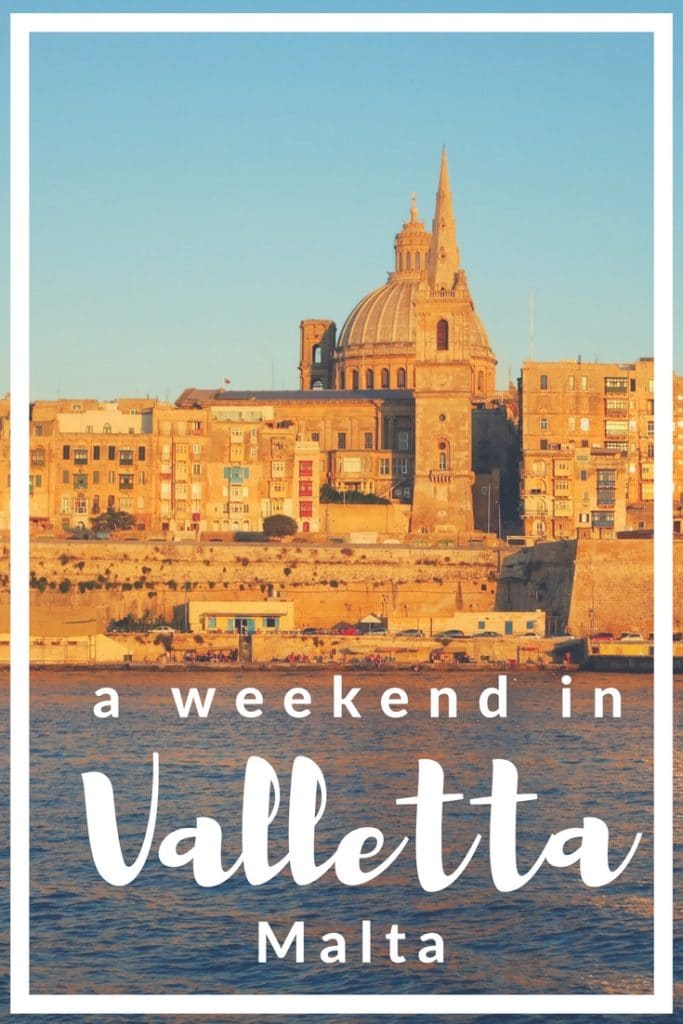
If I’m recommending you to go to Sliema, it’s not for the beach or the shops; it’s not even for Sliema itself. The ferry back at the golden hour just before sunset starts is the best view you can get of Valletta. So, depending on how much time you have left, do accordingly, but make sure to take the ferry from Sliema to Valletta.
Day 2 – morning – exploring the heart of Valletta and its treasures


After getting an excellent glimpse of the size of the city and its breathtaking views, it’s now time to explore the perfectly aligned narrow streets of the heart of Valletta. “Perfectly aligned?” Yes, it surprised me that such an old city would be almost as perfectly designed as Manhattan in New York.
Guided by Clive of Malta Private Guide, I learnt the reason why. The city is not “that” old as its construction “only” started in 1566 (which is rather recent if you compare it to other Capital cities in Europe, which were founded during Antiquity). The Knights of St John decided on its construction after the end of the Great Siege by the Ottoman Empire. It ended well for the Maltese, but during the months of the siege latest the Ottomans had the advantages. Nevertheless, a significant number of losses and strong winter storms made them leave. The Knights realised then that they needed a much more robust fortress than Fort St Elmo, which was the only construction of the peninsula at that time, felt during the battle. So the perfect design of Valletta is more due to military strategy than pure aesthetics.
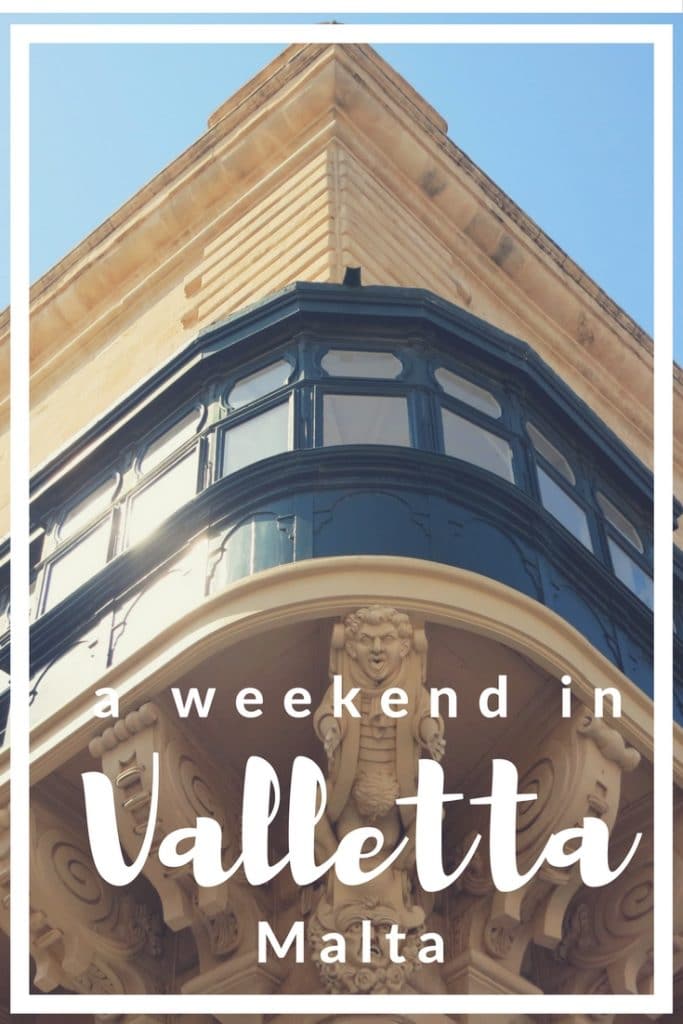
Give yourself a few hours to wander around the streets between the highlights of the city. There are high chances that if you like photography, you will spend time playing with the colourful Maltese balconies, the architectural symbol of Malta. I found it challenging to take good pictures as the narrow streets offer a cool shady area, but at the same time, bright sunlight is on the top of the buildings. Early morning light is a good option to avoid this big difference in luminosity. My favourite Street for the Maltese balconies was St Ursula Street (Triq Sant’Orsla).


While I loved getting lost in Valletta (the city is so small that you cannot be lost long!), here are a few highlights of the city within my favourites worth checking:
- Grandmaster’s Palace (Il-Palazz tal-Granmastru): This historic building is now the Presidential Palace. It is the perfect complement to Fort St Elmo if you want to go deeper into Malta’s history. I liked the portraits of the different Grand Masters of the Knights of St John to see what they looked like in their long black dress, and then see their armour delicately carved.
- Republic Square (Misraħ ir-Repubblika): The most elegant square of Valletta feature the statue of Queen Victoria and the entrance of the National Library. It is also the perfect spot for a cake and coffee, as it is used as the outdoor terrace of the Caffe Cordina (don’t miss the opportunity to have a look inside to select your cake).
- Saint John Co-Cathedral (Kon-Katidral ta’ San Ġwann): I’m sorry, no picture from the inside here as I visited during a mass and pictures are obviously not allowed. Beyond the classic golden features of the Baroque style of this Cathedral, this is the floor that makes it unique. The floor is made of colourful marble tombs of about 400 Knights and officers of the Order. This Cathedral is often considered one of the most beautiful Baroque churches in Europe.
- Saint Paul Shipwreck Collegiate Church (il-Kolleġġjata ta’ San Pawl): Since I’m a scuba diver looking to explore shipwrecks in Malta, I was intrigued by the name of this church. This is how I discovered one of the oldest churches in Valletta and another important historical event: the sinking of the boat of St Paul the Apostle. Malta is actually the island of Melita, described in the Bible, where St Paul and the crew found refuge, while he was on his way to Rome to be judged as a political opponent. The church is dedicated to this event that led to the Christianization of Malta in 60 A.D.


Day 2 – afternoon – return ferry trip to the Three Cities
The perfect end of your visit to the Valletta area will be with the Three Cities of Senglea (Isla), Cospicua (Bormla) and Vittoriosa (Birgu). For some inexplicable reasons, they can still be considered hidden gems as very few people think about going there or even know about these places. It was my case too, and thanks to my guide, I could discover an authentic and gorgeous part of Malta. The Three Cities were built long before Valletta; this is where the Knights of St John resisted the Ottomans during the Grand Siege. This is why Birgu in Maltese was named Vittoriosa to celebrate their victory.
While Valletta was packed with tourists at the end of July, I enjoyed Vittoriosa almost entirely for myself. After a copious lunch at Don Berto with seafood linguine and a chilled glass of Chardonnay from Gozo, overlooking the sheltered harbour between Vittoriosa and Senglea, we did a much-appreciated digestive walk through the charming streets of Vittoriosa. The Three Cities benefited recently from incredible refurbishment works, so you can notice that everything is nice and tidy. Each door, each window and each balcony is so photogenic that you can expect time to fly as you take pictures. However, if you’re looking for the true spirit of Malta, head to Cospiscua, the least touristy of the Three Cities.
After the end of my walk, it was time for me to leave for St Paul’s Bay, where my scuba diving adventures in Malta started. As I left Vittoriosa, I crossed an impressive double fortification. No wonder nobody could ever take the Three Cities.


Where to stay and eat in Valletta?


What type of party people are you? If you are looking for crazy parties, you will need to go to Sliema and even a bit further to St Julian and Paceville. On the side of the Three Cities, nothing at all so it’s perfect if you want to sleep. In the middle, Valetta centre offers chilled out evenings with lounge music in the different wine bars, cocktail rooftops and tapas venues.
I was in the mood for chilled-out evenings with a glass of wine (I guess that’s a sign I’m getting old). I knew that if it meant running after the ferry to go back to Sliema or the Three Cities, it would be too stressful, so I decided to sleep in Valletta. Most hotels and Airbnb rooms can be pricey, so I decided to stay at Sea-Esta Hostel (65 St.Mark St), which is a clean and stylish hostel. As I was exploring Valletta on my own and I was planning to spend most of my time outside, that was just what I needed.
On my first night, I enjoyed a cocktail for the incredible price of 5€ while overlooking the Grand Master’s Palace and listening to live Jazz Music at the City Lounge (131 Old Theatre Street). On my second night, I wanted a cosy place with Maltese food, red wine, and good wifi connection; I found the ideal place at Cafe Jubilee (125 St Lucia Street). It is a chain you can find in other towns of Malta and Gozo, but I found the quality of their food (you have to try their home-made ravioli) and their house wine excellent at a reasonable price.
Do you need more information to plan your dive trip to Malta?
Check these additional articles about travelling and scuba diving in Malta:
This article was written in partnership with Malta Tourism Authority. As always, all my views and opinions are my own and reflect my experience honestly.
PIN IT FOR LATER