


This post may contain affiliate links. It means I may earn a commission if you book or purchase something. This is at no cost to you and support this website. Learn more here.
Komodo was the place that made me fall in love with diving in Indonesia. Back in 2012, I spent just a few days sailing its turquoise waters between hilly islands and drift diving with manta rays. Thirteen years later, I returned diving in Komodo for a whole week, splitting my time between a liveaboard adventure and an extra day of diving from an eco-resort—and what I found was both surprising and reassuring: the harbour of Labuan Bajo had transformed into a vibrant town, yet the underwater magic of this UNESCO World Heritage site remained completely intact.
If you’re planning your first dive trip to Komodo, a bucket-list destination for many, or even thinking about going back, this comprehensive guide has everything you need to know. I’ll cover how to get there, the best time to visit (and why the “rainy season” might just be your secret weapon for a successful trip), what incredible marine life to expect, the best dive sites, and whether a liveaboard or a land-based trip is right for you. Get ready to dive into the heart of Komodo National Park!
Diving in Komodo at a glance
How good is diving in Komodo?
How to get to Komodo National Park


Komodo National Park is located in the province of East Nusa Tenggara, Indonesia, nestled between the islands of Sumbawa and Flores. The main hub for accessing this incredible marine park is Labuan Bajo, a bustling harbour on the western tip of Flores Island.
By plane
Both times I visited, I flew directly from Denpasar (Bali) to Labuan Bajo in just over an hour. There are now plenty of daily flights on multiple airlines, making it incredibly easy to combine a Bali dive trip with Komodo. The modern airport, complete with air conditioning and cafes, is a far cry from the open-air shack I remembered from 2012!
You can also fly via Jakarta, and increasingly, there are now direct international flights from Kuala Lumpur and Singapore landing directly in Labuan Bajo. From Bali, fares are very affordable, even with a 20 kg checked-in luggage allowance; my taxi from Amed to Denpasar Airport was even more expensive than the flight! To find the best prices on flights to Labuan Bajo, you can easily compare options on Trip.com.
If, like me, you’re travelling with dive gear, I highly recommend taking a taxi from the airport (I paid 50,000 IDR, about €3, but prices can go up to 100,000 IDR in the summer) even though it’s a very short drive. Labuan Bajo is built on hills and isn’t ideal for dragging heavy luggage on foot. Once in Labuan Bajo, you can board liveaboards or day trip boats at the harbour that will take you into the heart of the national park in about 2 hours.


By boat
Alternatively, for those who prefer not to fly, there is a public ferry which goes from Benoa Harbour (Bali) to Labuan Bajo in 36 to 38 hours. It is indeed a pretty long boat ride, but you’ll enjoy sailing along the scenic coasts of Lombok and Sumbawa Islands and you can book a cabin for increased confort.
Some liveaboard operators have also started to offer one-way diving cruises with a pick-up in Bali at Benoa Harbour too (close to Denpasar Airport). Scuba divers either start in Bali and end in Labuan Bajo, or do the opposite, so they usually fly back to Bali (or elsewhere) after the cruise ends, or fly into Labuan Bajo to catch the boat heading to Bali. While not as affordable as a local ferry, these cruises offer the unique experience of diving in areas like the northern shores of Sumbawa en route to Komodo (or Bali).
What is the best season to go diving in Komodo?

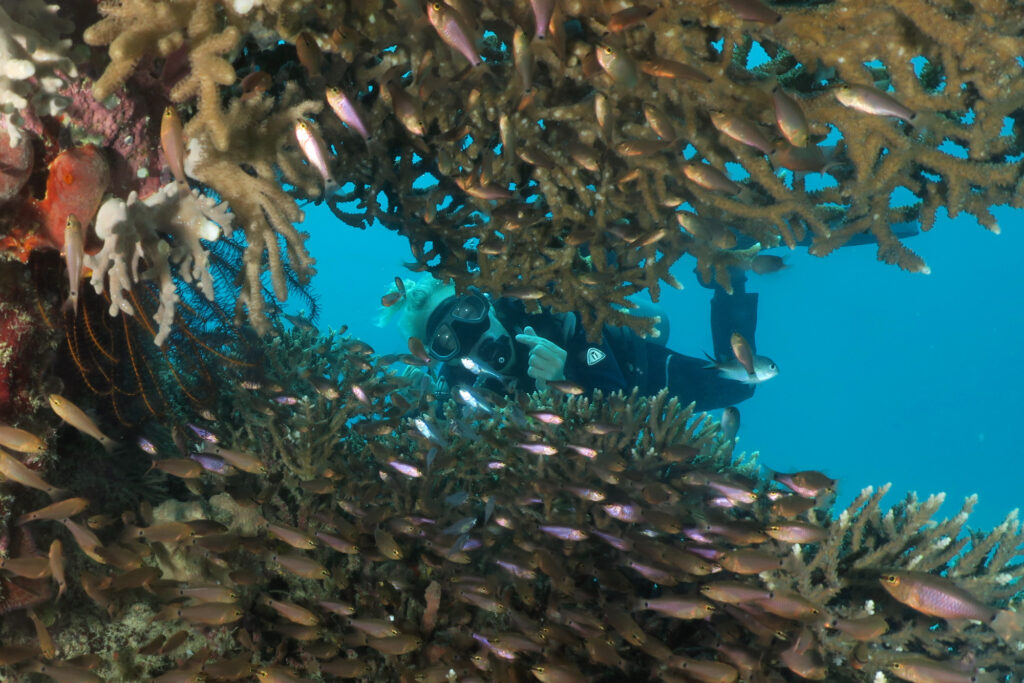
Komodo is technically diveable year-round, with each season offering unique advantages. While May to October (dry season) is considered the most popular time to visit due to calmer surface conditions and generally excellent visibility, there’s a common misconception about the rainy season that could lead you to miss out on some truly incredible diving.
I dived in January both in 2012 and 2025, right in the middle of the rainy season (December to March), and it was worth it each time. Regardless of when you visit, Komodo offers world-class diving, but your choice of season might influence which specific dive sites are most accessible and what marine life is most prevalent.
Why the rainy season is worth considering
If you’re willing to deal with a bit of unpredictable weather and aren’t bothered by the occasional rainfall (which often occurs in the afternoons or overnight), low-season diving in Komodo is incredibly rewarding.
- Peak Manta Season: This is the absolute best time to see manta rays! The plankton blooms brought by the monsoonal currents attract large aggregations of these majestic creatures. My incredible manta encounters, which you’ll read about below, were in January.
- Fewer crowds: Dive sites, especially in the central area, are far less crowded. This means you often get cleaning stations and vibrant coral gardens all to yourselves, creating a more intimate and serene underwater experience.
- Solid visibility: Despite the rain, visibility remained impressive during my January trips (15–30 meters). The water was also warm and comfortable at 26–27°C.
- Lush landscapes: Above the surface, the islands of the Komodo archipelago are transformed into bright green oases, a stark contrast to the drier, browner landscapes of the dry season.
Seasonal accessibility to the different areas
Komodo National Park is typically divided into 3 main dive zones:
- North Komodo: Known for dramatic pinnacles, strong currents, and large pelagic action, especially sharks during the dry season. Dive sites in this area typically cannot be reached during the rainy season due to rougher sea conditions.
- Central Komodo: Offers a wide variety of dive sites, accessible year-round, with a mix of currents, coral reefs, and pelagic encounters. This is where most day trips focus.
- South Komodo: Characterised by cooler, nutrient-rich waters, often with significant pelagic activity, especially mantas during the wet season. Dive sites in this area typically cannot be reached during the dry season due to rougher surface conditions. You also need at least a week-long liveaboard to get there.
Be aware of Komodo’s currents
Komodo is world-renowned for its nutrient-rich waters and incredible marine diversity, largely thanks to its powerful currents. These currents, driven by tidal exchanges between the Indian Ocean and the Pacific Ocean, can be strong and unpredictable, especially in the north, during the dry season.
While I don’t remember crazy currents from my first trip in 2012, this time around, we got rocked correctly, especially at Mawan before reaching the manta cleaning station. It’s worth noting that I was diving at the time of the full moon, which has a massive impact on tides and currents, making them stronger. For those who have never experienced drift diving, it would be beneficial to train in an easier place, like in Bali, to understand what to expect. Komodo’s currents are a significant factor in its vibrant ecosystem, but require experience and respect.
Where are the best dive sites in Komodo?


Komodo National Park is a haven for marine life, created by the Indonesian government in 1980. It is home to over 1,000 species of fish, 260 species of coral, and 70 species of sponges that have now been protected for more than 40 years (actually even more since some level of protection was already in place as early as 1938). In 1991, its exceptional biodiversity was recognised by UNESCO, which gave it the title of World Heritage site. Its strong currents between the Indian and Pacific oceans are one of the key factors of its marine biodiversity, making it one of the few places in the world where you can consistently see big pelagic species and stunning coral formations on the same dive.
During my second trip to Komodo National Park, I explored 10 different dive sites. Personally, it was magical to see that the diving in Komodo was just as good as 13 years ago; all the mantas and the colourful coral reefs confirmed that the national park’s protection efforts are working. Here are my top 5 dive sites from my latest Komodo adventure.
1. Mawan
- Zone: Central Komodo
- My Dive Parameters:
- 14/01/2025: 11 m – 52 min – 26°C
- 18/01/2025: 17 m – 61 min – 26°C
Mawan quickly became one of my all-time favourite dive sites. I was lucky enough to dive it twice, and both times, it offered magical manta encounters, completely away from any crowds. The name of the dive site means “pretty” in the local dialect, and it perfectly describes how incredible diving here is.


This large site includes a shallow manta cleaning station, sandy slopes, and vibrant coral gardens teeming with life. On my first attempt, diving near a full moon, the initial part of the dive was a powerful drift over a beautiful coral garden, which unsettled some less experienced divers among us. At one point, it felt like a real washing machine with swirling currents!
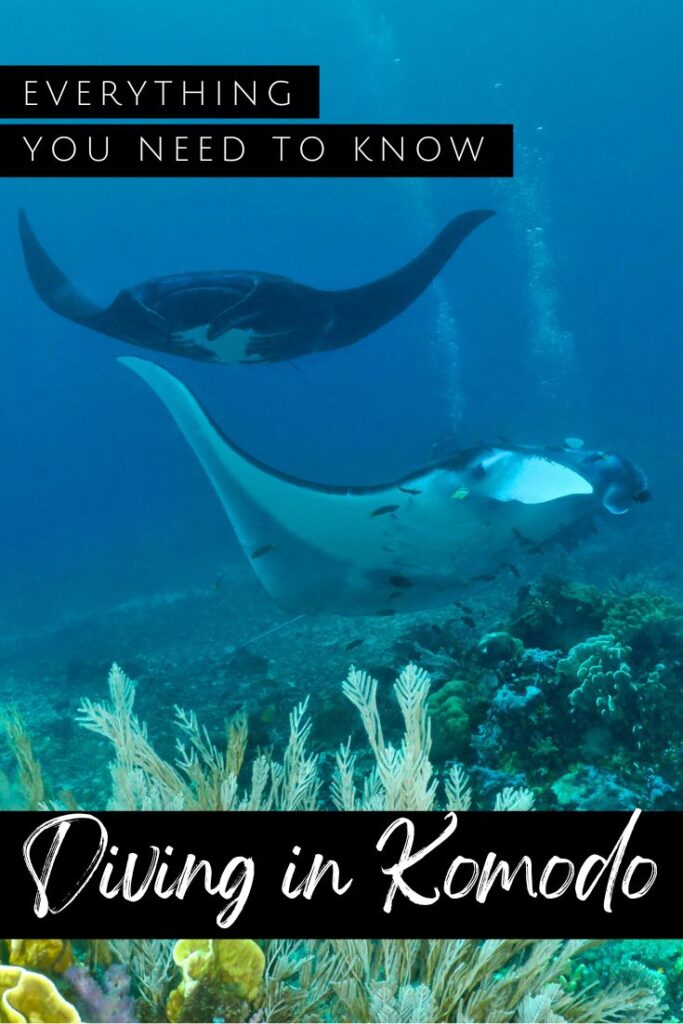
We escaped to a more sheltered sandy slope just below the cleaning station and waited. It wasn’t long before curious manta rays came to say hi, gliding gracefully above our heads for a truly memorable show. Among the reef mantas, one fully black, younger ray seemed a bit more shy and hesitant to approach: we need to always remember that our bubbles usually scare them off. So, breathe gently near them.


On my second dive at Mawan, well past the full moon, we managed to dive at slack tide, and it felt like a completely different site. We descended directly onto the cleaning station, and our group had the numerous mantas swimming around us for a good 20 minutes and just for ourselves. It was so breathtaking I almost missed a beautiful blue and yellow ribbon eel elegantly escaping its den and putting on a show with its undulating movements, reminding us how it got its name. We finished the dive gently drifting over a stunning and diverse hard coral garden, spotting hawksbill turtles, vibrant purple sea anemones, clown triggerfish, and blue-spotted stingrays.
2. Batu Bolong
- Zone: Central Komodo
- My Dive Parameters: 16/01/2025: 29 m – 48 min – 27°C
Batu Bolong is a deep wall dive with crystal-clear water, you simply cannot miss while diving in Komodo. Also located in the Central area, it’s accessible from both liveaboards and day trips. Known for its strong currents, this giant underwater pinnacle divides the currents on each side, meaning divers find shelter behind the wall and then make a U-turn before re-entering the current. Depending on your experience level, you descend to your deepest point and then ascend step-by-step, zigzagging along the wall.


There’s never a dull minute at Batu Bolong as you continuously pass by turtles, Napoleon wrasse, schooling sweetlips, emperor fish, blue trevally, batfish, and white-tip sharks! The wall itself is adorned with beautiful red gorgonians and massive barrel sponges. When you get a closer look, amidst the countless swallow-tail seaperch (anthias), soldierfish, lionfish, boxfish, and damselfish, you can spot an array of interesting macro critters, including the entire Nembrotha nudibranch family. Once back in the shallows for the safety stop, the pinnacle’s top reveals a colourful coral garden where butterflyfish and sergeant majors swirl between intricate hard coral formations.
3. Siaba Kecil
- Zone: Central Komodo
- My Dive Parameters: 18/01/2025: 25 m – 54 min – 27°C
Siaba Kecil was the first dive of my extra day trip. While beginner divers on our boat were dropped at Siaba Besar (which we used as a check dive during my liveaboard, offering nice corals between sandy patches which are ideal for adjustments), our small buddy team of advanced divers descended on the other side of the channel between the two islands. The reason we split was due to the strong currents that usually wash the dive site. However, it was pretty gentle that day for me. Better safe than sorry, this is not a dive site recommended for beginner divers.


As we swam along the channel’s slope, it was hard to decide whether to look into the blue for pelagics or explore the myriad of crevasses and mini-caverns, as there was so much going on! The rocky slope is beautifully decorated with stunning yellow, orange, and pink gorgonians, forming bouquets punctuated with brightly colored soft corals.
One of the most special moments for me was encountering a school of bumphead parrotfish – a sight I hadn’t seen since they disappeared from the Liberty shipwreck in Bali! But they weren’t the only cool sights: schooling sweetlips swam by, a Napoleon wrasse crossed my path and then decided to rest for a nap in one of the many tiny caverns (a behaviour I’d never seen before), and then I got distracted by a baby yellow boxfish. Their cuteness makes it impossible to resist taking pictures, though getting a good shot requires patience as they swim in all directions, often turning their back to you. The numerous cracks within the reef also hide all sorts of marine life, including sizeable Javanese moray eels.
4. Padar Kecil
- Zone: South Komodo
- My Dive Parameters: 14/01/2025: 19 m – 49 min – 27°C
This night dive was perhaps the best surprise of all my dives in Komodo. The only way to night dive in Komodo National Park is from a liveaboard. The night before we hiked the famous Padar Island to enjoy its jaw-dropping view at sunrise, we got to immerse ourselves right down below the viewpoint under a canopy of stars and a full moon.


Among the colourful fire urchins, which are common in Komodo but truly come alive at night, we encountered no less than 3 frogfish: one large black, one large pink, and an adorable young one with a bright orange colour. But even if frogfish are always a remarkable sight, the encounter I was happiest with was the crocodile fish, a species I hadn’t seen since 2015 in Bali. One point to bear in mind during the dive is that there are many lionfish, and they tend to follow divers as they use their lights to hunt for prey more easily. So, try to be mindful of what’s going on around you, especially while taking pictures, because as they are very venomous, you don’t want to step on one unknowingly.
5. Pengah Kecil
- Zone: Central Komodo
- My Dive Parameters: 18/01/2025: 23 m – 50 min – 26°C
The last dive of my latest trip to Komodo, during my extra day trip, did not disappoint and was the perfect farewell that made me want to dive in Komodo again very soon. Except for a couple of batfish checking us out, there wasn’t much marine animal action, but the state of the reef was simply amazing! It was by far the most colourful and densely covered reef and wall I saw in Komodo, with stunning compositions of hard corals, gorgonians, and soft corals. The only downside was that the weather had turned in the afternoon, and I’m sure the lack of light didn’t do justice to this incredible dive site. I can’t wait to see it again in better conditions, especially now that I have a new wide-angle lens!


What About Manta Point?
- Zone: Central Komodo
- My Dive Parameters: 15/01/2025: 18 m – 52 min – 26°C
While Manta Point was a total blast back in 2012, giving me my first big manta experience, this time I didn’t spot a single manta ray. While we did see a spotted eagle ray right after descending (a short encounter that still took my breath away as it’s my favourite marine animal), the rest of the dive felt long and empty without much to see. Perhaps I was just unlucky that day. Thankfully, both of my dives at Mawan were extremely rewarding, with numerous manta rays.
Note: Manta Point is indeed famous for its manta ray population, which can be seen year-round. Sightings are more likely at the the rainy season as they are drawn to plankton blooms. This site features a cleaning station where manta rays come to have their parasites removed by smaller fish. Divers can also often spot other marine life here, including white-tip reef sharks and turtles. So, while my personal experience on this trip was a miss, it remains a prime location!
Hidden Gem: Kelor Island
- Zone: Central Komodo
- My Dive Parameters: 16/01/2025: 16 m – 60 min – 27°C
On the afternoon of the last day of my diving liveaboard, the weather turned, and we had to find shelter for our final dive. While not a popularly hyped dive site, the macro dive I did at Kelor Island was surprisingly good, revealing much-desired flabellinas and blue dragons, a juvenile sweetlips, and orangutan crabs. It just goes to show, Komodo always has surprises in store!


Advanced Komodo dive sites
While my recent trip focused on the Central Komodo dive sites, the National Park boasts many more incredible locations, especially in the North zone, often only accessible during the dry season and for experienced divers. These are firmly on my bucket list for my next visit: I’ve already have trips booked for this summer but I think I know where I’ll go next year!
- Shotgun (North Komodo): This site is renowned for its powerful currents, earning it the nickname “Shotgun.” For experienced divers seeking an adrenaline-pumping adventure, it offers the chance to see a vast variety of marine life, including large schools of fish, turtles, and sharks.
- Castle Rock (North Komodo): Named for its large rock formations, Castle Rock is a submerged pinnacle that rises close to the surface. It’s known for strong currents and is home to a rich diversity of marine life, including schools of fish, eagle rays, giant trevally, and white-tip reef sharks. Ideal for experienced divers.
- Crystal Rock (North Komodo): Another popular Northern site known for its stunning coral reefs and abundant marine life, including schools of fish, turtles, and sharks, and often paired with Castle Rock for strong current dives.
- The Cauldron (North Komodo): A thrilling drift dive through a channel, known for its powerful currents that sweep through a “cauldron” shaped area, bringing in large pelagics like sharks and rays.
What to see underwater in Komodo


Komodo’s marine life is truly world-class. Thanks to its strong currents and protected status, the biodiversity is staggering. The reefs are vibrant, healthy, and teeming with life. It’s one of the few places in the world where you can consistently see big pelagic species and stunning coral formations!
On just this one trip in January 2025, I was incredibly fortunate to encounter:
- Reef manta ray
- Whitetip shark
- Blacktip shark
- Hawksbill turtle
- Spotted eagle ray
- Blue spotted stingray
- Napoleon wrasse
- Bumphead parrotfish
- Frogfish
- Boxfish
- Batfish
- Lionfish
- Sweetlips
- Ribbon eel
- Javanese moray eel
- Orang-outan crab


Komodo is not a macro dive destination per se, but over my 2 dive trips I saw an interesting array of nudibranchs, especially in the nembrotha family:
- Much-desired Flabellina
- Blue dragon
- Dusky nembrotha
- Crested nembrotha
- Chamberlain’s nembrotha
- Purple-lined Nembrotha


Liveaboard or Day Trip? My experience from both


I’ve now experienced Komodo diving both ways: back in 2012 with day trips, and in 2025 with a mix of liveaboard and day diving. Both have their unique pros and cons, and your choice will depend on your budget, time, and desired level of comfort. My first trip was a short 5-day adventure with 3 scuba diving day trips and 1 snorkelling day trip.
This time, to go further into the national park, visit Komodo Island itself (I couldn’t reach it during my first trip, only Rinca Island), and witness the breathtaking sunrise view from Padar Island, I opted for a liveaboard, even if it was a relatively short one with 3 days/2 nights. After the liveaboard, I chose to relax at a boutique eco-resort on the south coast of Labuan Bajo, nestled in the heart of the mangrove with direct access to the National Park. Staying for 3 nights, I took the opportunity to go for an additional day trip from their private pier. This confirmed that day trips are still an excellent choice; even if you can’t go as far as a liveaboard, you still get to see amazing sites such as Mawan, Manta Point, or Batu Bolong, all conveniently located in the central diving area reachable on a day trip.
I booked with Maika Diving, a locally run company that offers both day trips and liveaboards at affordable prices. While there’s no luxury on board, they provide everything an adventurous diver needs. Maika has now launched a newer, larger 24m phinisi called Maika Dive, with 4 cabins (2 sea-view, 2 below deck – one double, one 4-bunk) all with en-suite bathrooms, and a dedicated camera station – a definite upgrade I can’t wait to try! They also have a partnership with Menjaga Bay Resort, so after my liveaboard (which felt a bit like camping at sea), they dropped me there on their way back to Labuan Bajo. I could relax and splurge a bit in luxury, and this way I found the strength to go got an extra day of diving directly from their pier – super straightforward to organise!
Komodo Liveaboards: Pros & Cons
Liveaboards in Komodo, typically traditional Indonesian wooden phinisi vessels, offer a truly immersive experience. My 3-day/2-night trip aboard Apik, a small 20m wooden phinisi, featured 3 cabins (2 double rooms at deck level, and a 4-bunk bed cabin below deck, ideal for solo travellers on a budget).
- Departure/Return: Boats usually depart around 9:30-10:00 AM on the first day and return between 3:00 PM and 4:00 PM on the final day.
- Check Dive: Often starts with a check dive at sites like Siaba Besar, featuring nice corals between sandy patches, allowing you to adjust gear before Komodo’s famous drift dives. We even saw a white-tip and a black-tip shark on our check dive – not bad!


Pros:
- Access to Remote Sites: Crucial for reaching Komodo Island itself (not just Rinca), enjoying the iconic Padar Island sunrise hike, and accessing far-flung dive sites in North and South Komodo.
- Night Diving: The only way to experience thrilling night dives within Komodo National Park, like my unforgettable dive at Padar Kecil. You get to stargaze under clear, unpolluted skies and encounter nocturnal marine creatures in their natural habitat.
- Seamless Experience: You wake up right at the dive sites, maximising dive time.
- Full Immersion: Live and breathe diving for several days, building camaraderie with fellow divers.
- Simpler Logistics: Once on board, everything from meals to dive planning is taken care of.
Cons:
- Cost: Generally more expensive than day trips, though budget options exist.
- Less Comfort (on budget boats): Some liveaboards are basic, feeling “like camping at sea” compared to a resort bed.
- Less Flexibility: Fixed itineraries mean less freedom to choose your activities outside of diving.
Komodo Day Trips: Pros & Cons
Most diving day trips from Labuan Bajo focus on the central area of the marine national park. Operators like Maika Diving offer daily trips visiting 3 locations each day.
- Meet-up time: Divers typically gather early, around 7:00 AM.
- Food: Most companies offer some form of breakfast with fruits and bread, and lunch on board. Maika Diving, for example, was excellent for providing freshly cooked breakfast and lunch with plenty of homemade snacks on board!
- Daily Diving: Daily diving trips visit 3 locations each day in the central area of the marine national park.


Pros:
- Affordability: Generally much more budget-friendly than liveaboards.
- Flexibility: Ideal for shorter stays, or if you want to dive for a few days and then relax in comfort at a resort.
- Accessibility: Easy access to popular central Komodo sites like Mawan, Batu Bolong, and Manta Point.
- Comfort: You return to a comfortable bed, hot shower, and a variety of dining options.
Cons:
- Limited Reach: Cannot access the more remote North or South Komodo dive sites, nor the farther islands like Komodo Island or Padar Island.
- More Travel Time: Daily boat rides to and from the national park, which can take up to 2 hours each way.
- No Night Dives: These are exclusive to liveaboards.
What to do beyond diving in Komodo?

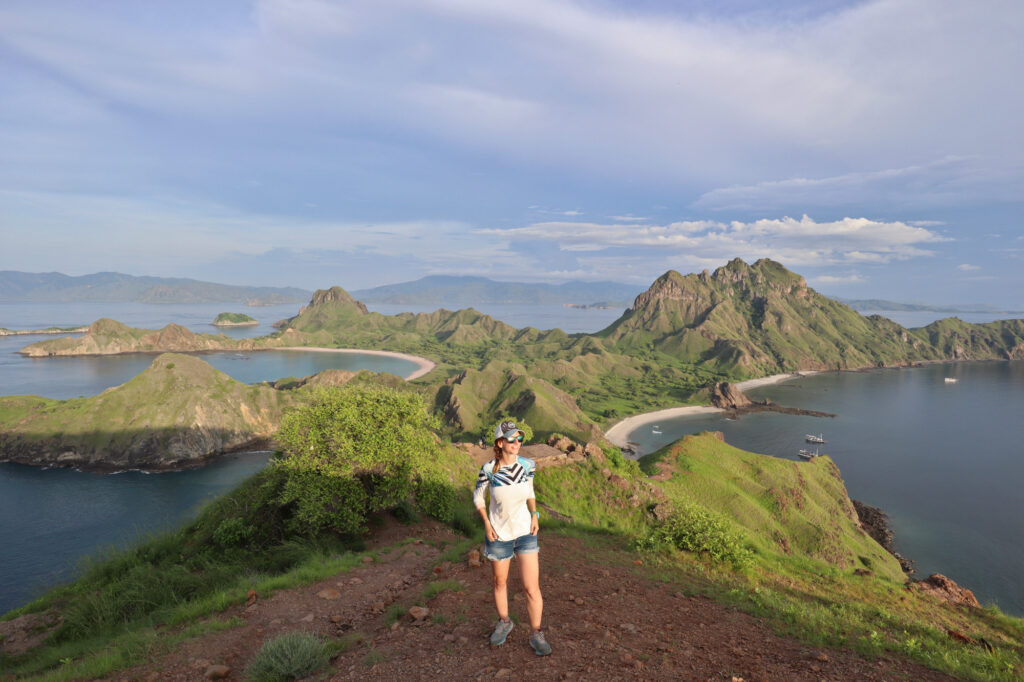
While Komodo National Park is a diver’s paradise, I highly recommend making time for topside explorations. For sure, you don’t want to miss the opportunity to meet the endemic Komodo dragons, something that can be arranged even as a day trip. Here are below the experiences I felt complete the best a Komodo scuba diving adventure, but note I removed Pink Beach or Kalong Island as I felt a bit underwhelwed by these.
- Komodo Island: On my recent trip, I finally saw the dragons on Komodo Island itself! It was an incredible experience to witness these ancient, giant lizards in their natural habitat, along with wild deer sunbathing on the beach and cockatoos in the canopy while hiking in the jungle – wildlife encounters I didn’t get when I explored Rinca Island on my first visit. Komodo dragons can grow up to 10 feet (3 meters) long and weigh up to 150 pounds (70 kg, so make sure you respect all the safety instructions of the national park ranger accompanying you. They look lazy, but they are actually fast, deadly predators.


- Padar Island: A relatively short but steep hike with 800+ steps to climb which leads you to one of the most iconic and breathtaking views in Indonesia. The panoramic vista of the tri-colored beaches (white, black, and pink) meeting the turquoise sea is unforgettable and a must-do. After the night dive the day before, it wasn’t so easy to wake up at 5 am but it was all so worth it, especially since we had the viewpoint almost only for our group thanks to the low season.


- Explore Labuan Bajo: This harbour town has transformed dramatically since my first visit in 2012. Rediscovering Labuan Bajo came as a shock—it’s now a real city with trendy cafes, even a small shopping centre, a paved street lined with palm trees, a seafront promenade with a long jetty and a bustling food night market (mostly grilled seafood – for those who like spicy food, try with padang sauce) below a bamboo canopy by the sea. In 2012, most of the town was just a dirt road! Although hilly with steep slopes and stairs, it’s now surprisingly walkable if you don’t mind climbing. You don’t need to dedicate a full day to it, but before and after your diving trip, Labuan Bajo offers enough to keep you busy and entertained. Although one sure thing, don’t miss the views from higher grounds of the natural harbour formed by the bay of Labuan Bajo with the islands of Komodo National Park in the background.


My Favourite Addresses in Labuan Bajo:
- Bacarita Café: Hands down the best coffee in town, offering delicious all-day brunch. They also have a nice selection of authentic local Flores handicrafts, giving it a trendy but local touch, all served by lovely staff.
- Taman Laut Restaurant: Come here for the best view at sunset while enjoying delicious seafood. Anecdotally, without any planning, I ended up sitting with three other divers from my liveaboard the night before boarding – a perfect start to the trip!
- Warung Brothers: This is the secret spot where local and foreign dive pros hang out. Expect a great vibe and an excellent place to snatch secret insights about diving in Komodo while tasting traditional recipes of Flores Island. They also serve great cocktails made with the local sopi alcohol (derived from coconut), which I liked even though I generally dislike arak in Bali.
What is the cost of diving in Komodo?

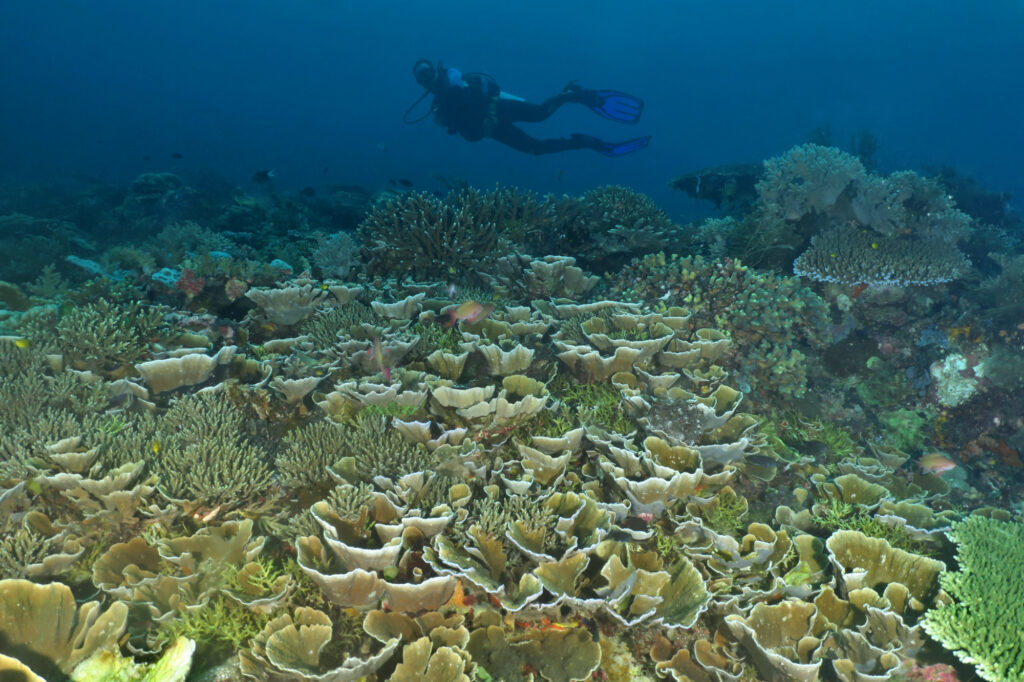
In general, Komodo offers excellent value for diving in Indonesia compared to other bucket-list dive destinations like Raja Ampat or Bunaken. However, the costs can vary widely depending on your choices.
Day Trips
Most diving operators in Labuan Bajo offer 3-tank dive trips for around 2,600,000 IDR (about €140 or €46 per dive). This price usually includes a form of breakfast with fruits and bread, and lunch on board. Maika Diving, for example, was fantastic for providing a freshly cooked breakfast. Rental equipment is often included, but if you bring your own scuba diving gear, you can usually get a 10% discount.
Liveaboards
Komodo stands out for offering liveaboard options for all types of budgets. Backpackers can find basic boats with amenities that feel “like camping at sea.” At the same time, divers seeking full comfort can board luxurious traditional phinisi wooden boats with en-suite sea-view cabins and fine dining. There are, of course, many excellent value-for-money options in between.
The length of the liveaboard is a significant factor in its affordability. As Labuan Bajo is only about 2 hours away from the central area of the national park, shorter liveaboards (e.g., 3 days/2 nights) are possible, which come at a much more affordable rate (starting from around 9,000,000 IDR / €475).
Here are some indicative price ranges you might find on platforms like Liveaboard.com:
- 4 days/3 nights:
- Budget boat: From €600
- Luxury boat: From €2,000
- 6 days/5 nights:
- Budget boat: From €1,000
- Luxury boat: From €3,000
Important Note: Contrary to day trips, rental equipment on liveaboards is typically an extra cost. Always confirm this with your chosen operator.
National Park Fees
Like all national parks in Indonesia, there is a park fee for snorkelling and diving in Komodo. However, calculating the exact cost can be tricky, as some fees are divided by the number of people on your boat. So don’t be surprised if some operators can’t give you a straight answer at first!
Here’s a general breakdown of the fees:
- Komodo Marine Park Ticket: 250,000 IDR per person, per day.
- Scuba Diving Surcharge: 25,000 IDR per person, per day of diving.
- Total per day of diving: 275,000 IDR (about 15 € per day)
There’s also a harbour fee of 25,000 IDR (about 1€). If you only do day trips, you technically pay this every day. However, if you’re on a liveaboard for several days, you typically pay it once for the entire trip. Some diving operators include these fees in their quoted prices, while others list them separately. Always clarify!
For land activities, things get a bit trickier with shared ranger fees:
- Ranger Fee – Padar Island: 150,000 IDR (shared among up to 5 guests)
- Ranger Fee – Komodo/Rinca Island:200,000 IDR (shared among up to 5 guests)
This means the cost per person for ranger fees decreases significantly with more people on your boat. For example, if you are 5, 10, or 15 people on board, the cost per person will be the smallest. But for any number in between, you divide the fee by the actual number of people present. So, if you are 6 on board, you would need two rangers for Komodo Island, making the total amount to be shared 400,000 IDR (or about 66,667 IDR per person). If you were 5, it would only be 40,000 IDR per person. While the difference per person might seem small (e.g., 1€ difference), it’s good to be aware of the structure.
For those wishing to bring a drone, it is possible but requires a permit in advance: IDR 2,000,000 (about 100 €). The application must be submitted 3 days in advance, so get in touch with your booked operator in time to go through the process.
Where to stay to explore Komodo National Park?

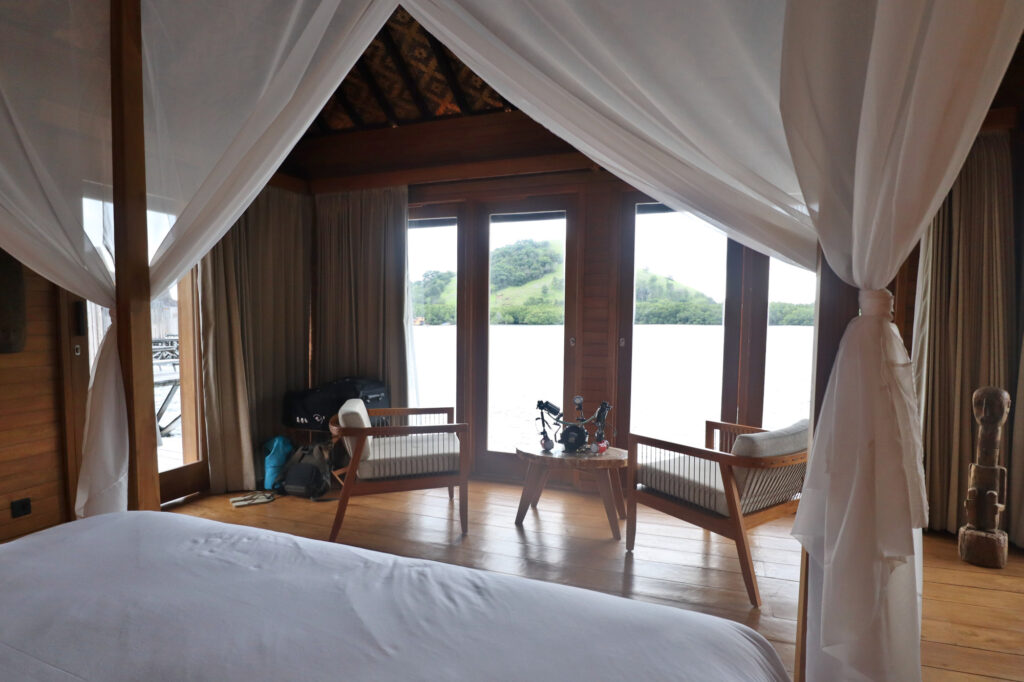
Before and after my diving liveaboard, I split my time between the centre of Labuan Bajo and a remote eco-resort halfway to the National Park. This combination lets me enjoy both the town’s energy and total nature immersion. It’s easy to find something for every taste and budget—from lively backpacker hostels to ultra-luxurious villas.
- Green Hill Boutique Hotel: Located right in the centre of Labuan Bajo, the Green Hill hotel is great for easily walking to restaurants, dive shops, and catching stunning sunset viewpoints over the harbour. They offer charming AC sea-view private double rooms with a shared balcony, which are simple, clean, and have a bit of style in their architecture and furniture, offering great value for money for those who need more comfort. They also have a dorm for budget travellers. In any case, the cooked breakfast in the morning is amazingly delicious; I had pancakes one morning and a very spicy nasi goreng the other. Last important point, like many hotels in the centre of Labuan Bajo, expect walking up steep stairs up and down several times a day (without even asking for it, a member of the staff carried my scuba diving bag to my room).


- Menjaga Bay Resort: For an eco-luxury experience, this resort nestled in the mangroves, is located in the south of Labuan Bajo about a 30-minute boat ride away from Labuan Bajo harbour. Built with natural materials and featuring the best of local craft, It offers tranquillity and direct access to the National Park, I couldn’t choose a better place after my diving liveaboard for the end of my trip. They have a private jetty for dive boats to pickups and dropoffs, making it incredibly convenient if you book day trips with their partner dive shop (Maika Diving). They offer over-the-water bungalows and other rooms higher up on the hill for killer sunset views. I stayed in the former, but I had the opportunity to visit the latter, and it felt somehow more luxurious. However, I’m not going to lie, staying near the pier over the water was extra convenient when I came back from both the liveaboard and the day trip, as I could just rinse and store my diving gear in the open-air bathroom in a matter of minutes.


If you want to treat yourself, I cannot recommend enough to make a stay for at least 2 nights part of your diving adventure to Komodo National Park. The food at their elegant restaurant is so good, with a different menu every day based on fresh products available, from breakfast to dinner, that you won’t even feel the need to take their shuttle boat to town for dining out. They even have a full-service spa in the middle of their flowered garden, managed by one of Bali’s top massage trainers, is a highlight. I chose a foot massage, and I ended up having the best full lower-body massage I’ve ever had since moving to Indonesia.


Do you need more information to plan a dive trip to Indonesia?
Check these additional articles about travelling and scuba diving in Indonesia:
PIN IT FOR LATER



I was there last October. Diving with Dragon Diving. And I was sleeping in the same room as you did in Green Hill. Exceptional divings! I wish you pleasant travels and amazing diving adventures. Best regards from Slovenia, Andreja
Thanks for the feedback! Did you manage to go diving in the north?