

You made it to Thailand, congratulations! Getting around this beautiful country is simple, convenient, and affordable. Although Thailand is a large country, travelling between places is easy thanks to its wide range of transportation options. Knowing how you will get around Thailand is essential when planning a trip to Thailand. First, you need to choose how you will get from the airport to your first stop and then how you will travel between the different sightseeing and diving spots across the country. With plenty of choices to suit every budget, let’s dive into the details…
Using public transportation: my favourite option

Thailand’s size can feel a bit overwhelming at first, and figuring out how to travel between regions might seem complicated. But once you’re there, you’ll find it’s much simpler than expected. Depending on your destination, you can take your time on scenic routes or opt for quicker domestic flights. You can check which of Thailand’s nine international airports is closest to your destination, especially if you are heading to the dive spots in South Thailand. While not all of them have direct flights from abroad, you can save valuable time by looking for the right connecting flights.
I use land transport instead of domestic flights because the journey time to and from the airport can quickly add up, and you don’t have to worry about your luggage’s weight. Trains and long-distance buses in Thailand are comfortable and reliable, with overnight options offering an excellent way to save time and money on accommodation. Minibuses are another affordable option and a wonderful opportunity to meet other travellers and exchange tips on the road. Renting a car is possible, but since Thailand drives on the left and requires an international driving licence, I find it’s rarely worth the hassle when there are so many easy and affordable transport choices available.
For island-hopping adventures, ferries and speedboats are the way to go. Travelling by boat is not only affordable but also one of my favourite ways to see Thailand: the excitement of gradually approaching the island from the ferry adds to your travel experience.
Public Transportation

Here are the different options of public transportation you can use while travelling across Thailand:
- Train: The rail network connects Bangkok with most major cities and regions, making it an excellent option for both short and long-distance travel. You can choose between day trains or overnight sleeper trains, which let you travel in comfort while saving on accommodation. There are several classes available, from basic fan-cooled seats to first-class cabins with air conditioning and private compartments. Train tickets can be conveniently booked online through 12go.asia or at train stations.
- Bus: Buses in Thailand are one of the most efficient and budget-friendly ways to travel long distances, with both day and overnight services available. Overnight buses let you rest and save on accommodation as you move between destinations. All routes run on fixed schedules with frequent departures, and the VIP class is the best option, all at a surprisingly affordable price. Tickets can be easily booked in advance through 12go.asia or at bus terminals.
- Minibus: Minibus or van transfers are one of the most convenient and affordable ways to travel between cities, islands, and tourist areas. These comfortable, air-conditioned vans usually operate on fixed routes and are perfect for medium-distance journeys. You can easily book your seat online through platforms like 12go.asia or at local travel agencies.
- Songthaew: Songthaews are one of the most common and budget-friendly ways to get around in Thailand, especially in smaller towns and coastal areas. These shared open-back trucks, fitted with two benches along the sides, follow fixed routes but can also be flagged down anywhere along the way. They’re perfect for short to medium distances. Fares are low and usually paid directly to the driver, but it’s a good idea to confirm the price or destination before hopping in, as routes and costs can vary from one area to another.
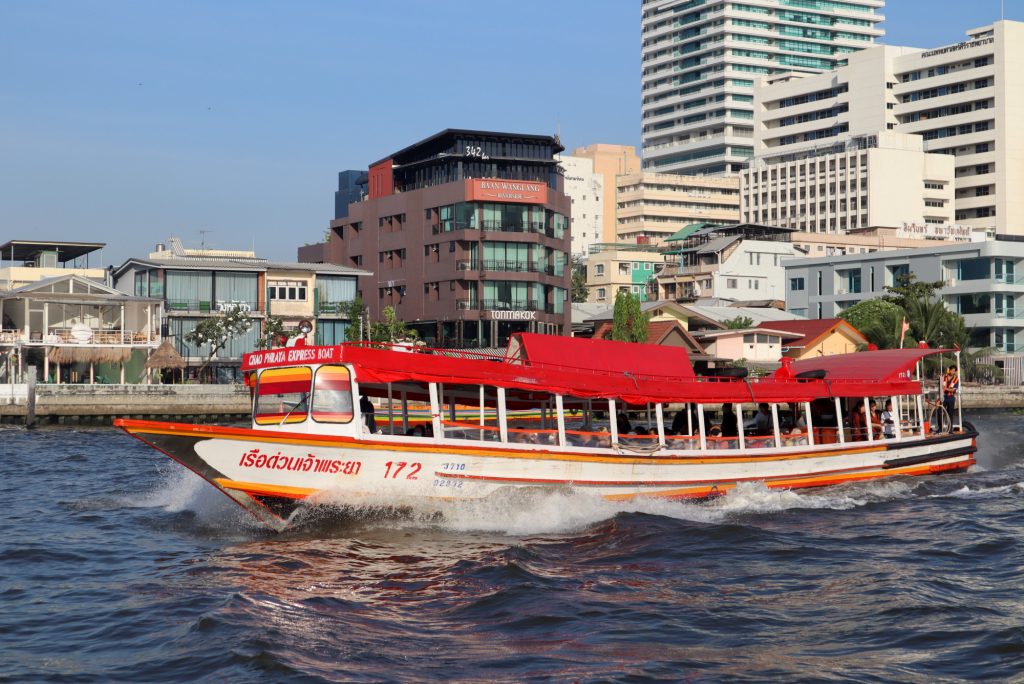
- Subway & sky train: Only available in Bangkok, the MRTA is an efficient way to explore the capital city on a budget while experiencing the real life of people living and working there. This is why I’d like to recommend only riding the trains, either underground or above the ground, without heavy luggage, so you’re not getting in the way. Note: Bangkok also has public boats along the Chao Phraya River.
- Ferry: Ferries are an essential and enjoyable way to travel between Thailand’s many islands and coastal regions, offering both convenience and stunning sea views along the way. Travelling by ferry is affordable, reliable, and often a highlight of the journey, with options ranging from large passenger ferries, overnight ferries, to faster speedboats. Schedules can vary depending on the season, so it’s best to check and book tickets in advance through 12go.asia for up-to-date timetables and secure reservations.
- Longtail boat: Longtail boats are an iconic part of travelling in Thailand. These traditional wooden boats, powered by a car engine mounted on a long pole, are used for everything from short transfers between beaches (“water taxi”) to private island-hopping tours. Prices are usually per boat and can be booked via local travel agencies or your hotel. It’s always best to agree on the fare and route before setting off.
Hiring a driver

Hiring a driver in Thailand is one of the most convenient and comfortable ways to travel. It’s a stress-free, reliable, and flexible option that lets you avoid navigating unfamiliar roads or juggling multiple transfers. The cost is usually per car rather than per person, which makes it even more affordable if you share the ride with fellow travellers or dive buddies. I usually opt for the comfort of a private driver to reach my first hotel after landing in Thailand with my luggage and dive gear. It’s easy to arrange and surprisingly affordable. You can talk to your hotel or dive shop, or you can prebook a convenient and hassle-free transfer here.
- Taxi: Taxis are available in major cities such as Bangkok, Chiang Mai, and Phuket. Most taxis are metered, but it’s always best to confirm that the driver uses the meter before starting your journey, as some may prefer to negotiate a fixed fare instead, which rarely works in your favour. Fares are generally affordable, and taxis can be easily booked through hotel receptions or hailed directly on the street.
- Ride-hailing apps: Using an app such as Grab (Thailand´s version of Uber) makes getting around Thailand incredibly easy and reliable. With Grab, you can book taxis or private cars directly through the app, track your driver in real time, and pay a transparent fare without the need to negotiate. Klook is ideal for booking private drivers in advance for longer trips and airport transfers, offering a range of vehicles and itineraries to suit your travel plans. Both platforms are user-friendly, safe, and affordable.
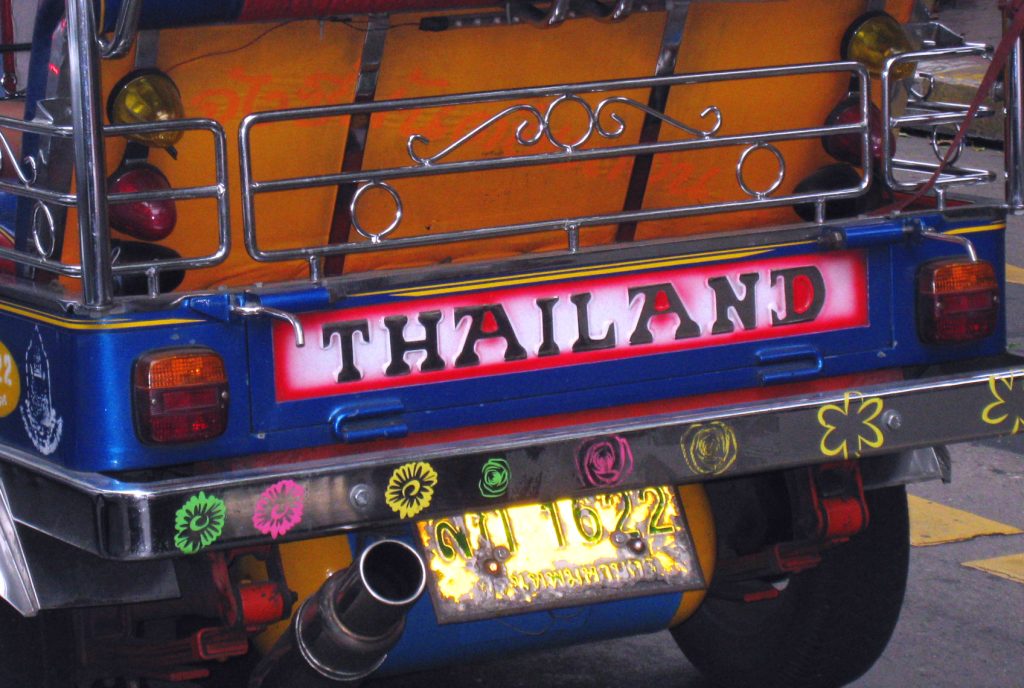
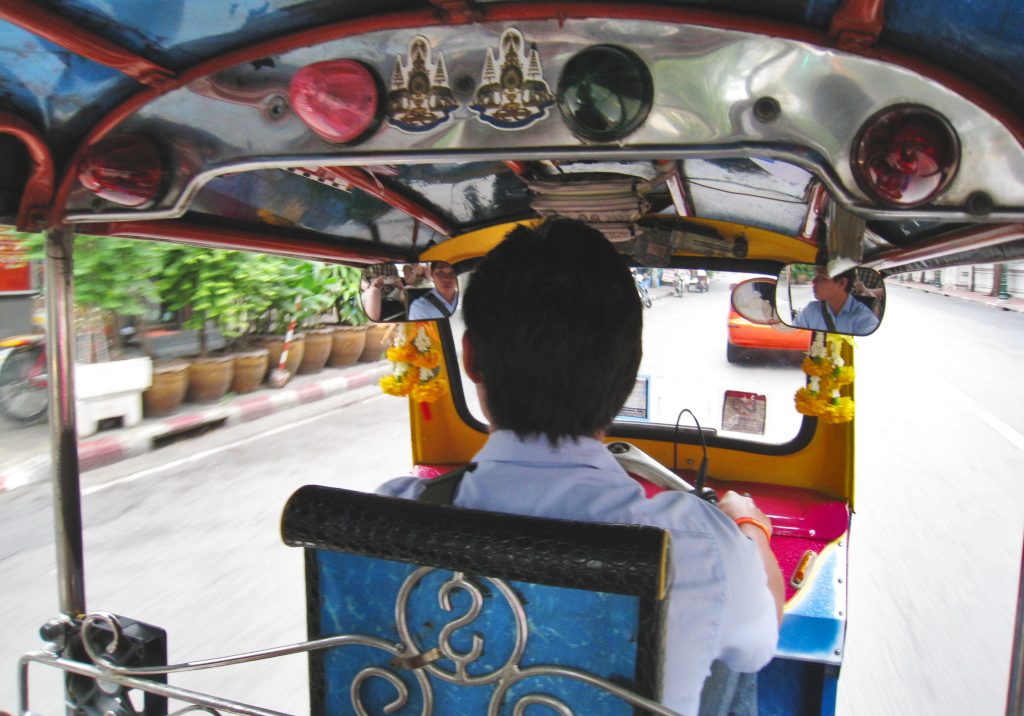
- Tuk-Tuk: When it comes to short-hop rides in Thailand’s bustling cities, you should definitely enjoy a ride in a colourful open-sided Tuk‑Tuk. These three-wheeled vehicles are perfect for quick trips in cities and offer an up-close view of everyday street life. You should agree on a fare in advance, and stay alert, especially in crowded tourist zones where prices may be inflated, or detours suggested. Don’t hesitate to ask at your accommodation about the regular fares that you don’t pay too much for a farang (foreigner) price.
Getting around Thailand from Bangkok


Getting around Thailand from Bangkok is easy and convenient, with excellent connections to every region of the country, whether you prefer to travel by plane, train or bus. The country is well-connected, with several domestic airlines offering frequent flights, making it easy to plan efficient routes. Domestic flights are generally punctual and comfortable, but they are not always the most affordable or time-saving option. Especially for us divers, who need to keep an eye on our no-flight time. Here are some of the best routes to get to your next location:
- To/From Koh Tao: The most popular route if you want to dive in Koh Tao is by taking the overnight bus or train to Chumphon, followed by a ferry trip directly to Koh Tao. You can also fly to Koh Samui or Surat Thani and continue on an overnight sleeper ferry to the island, depending on your arrival time.
- To/From Similan Islands/Kao Lak: You can either fly to Phuket, followed by a short ride or take the overnight bus directly to Khao Lak, where you then board your liveaboard to dive in the Similan Islands.
- To/From Phuket/Koh Phi Phi: You can fly directly to Phuket or take one of the many available bus connections. If you want to continue to Koh Phi Phi, you can take a ferry from Rassada Pier.
- To/From Koh Lanta: If you plan to dive in Koh Lanta, the quickest route is to fly to Krabi or Trang, followed by a shared minibus or private transfer to the island via short ferry crossings. Alternatively, you can also take an overnight bus to Krabi.
- To/From North of Thailand: The quickest way is to take a short flight to Chiang Mai or Chiang Rai, while those who prefer a slower pace can enjoy the scenic overnight train or comfortable long-distance bus.
Do you need more information to plan your trip to Thailand?
Check these additional articles about travelling and scuba diving in Thailand: