


This post may contain affiliate links. It means I may earn a commission if you book or purchase something. This is at no cost to you and support this website. Learn more here.
Saying this was the most anticipated trip of my second year in Indonesia is an understatement. Also known as Celebes, Sulawesi isn’t the kind of destination you can just book and go, at least not if you want to get the full picture of its natural and cultural beauty. While it is possible to fly into Manado, book a dive package, and never leave the resort, that would barely scratch the surface. What drew me in the first place was, of course, expanding my knowledge of diving in Indonesia, but also the challenge of connecting the dots between Bunaken National Park, Bangka Island, Lembeh Strait, the Togean Islands National Park, and the Toraja Country. It took me a year to solve the puzzle of my itinerary from islands to highlands.
In a world where overtourism has turned many tropical escapes into theme parks, reaching some destinations in Sulawesi still feels like a reward: Each transfer requires patience, each connection is a leap of faith. But it’s also what makes this island so deeply satisfying to travel through as you earn every experience. That’s why I decided to return to a good old-fashioned format of travel blogging with a day-by-day diary. These notes capture the underwater wonders but also the small, logistical victories that made my journey possible. If you’ve ever dreamed of exploring Indonesia in depth, beyond Bali, this is what crossing Sulawesi in a month from north to south looks like.
1 – Diving in Bunaken National Park

2nd of June
My Sulawesi adventure began with a red-eye flight from Bali, the kind of journey that tests your endurance before it rewards you. Boarding at 1 am, I was already half asleep at the gate before realising Pizza Hut was the only place open, so I ate myself into what I hoped would be a food coma. It didn’t work. The TransNusa crew left the cabin lights blazing all night, and by the time we landed in Manado at 4 am, I felt like a zombie with a dive bag. Thankfully, I’d been wise enough to book a room at The Sentra Hotel, a stylish and spotless hotel near the airport that belongs to the Swiss-Belhotel group. Thanks to a 10-minute ride with a Grab driver, a warm shower, a couple of blissful hours of sleep in the comfiest bed, and a tasty breakfast at their fantastic morning buffet with lots of Asian and Western options, I was revived and ready for the next leg. While June is supposed to mark the beginning of the dry season, during breakfast, intense rainfall fell. I crossed my fingers and thought, “OK, we’re still very early June”.


The team from Siladen Dive Resort came to pick me up in their minivan, and off we went for a 45-minute ride to the small harbour of Tiwoho, where their boat awaited. Fifteen minutes into a super smooth crossing, we reached Siladen Island, part of Bunaken National Park (there are 5 main islands). Finally, I was standing barefoot on white sand, and immediately felt welcomed like family. Despite arriving well before noon, the staff had already prepared my spacious wooden bungalow, so I napped through the drizzle and woke just in time for lunch served until 3 pm (thankfully). Since I was still groggy, I skipped diving (safety first), took time to assemble my underwater camera comfortably on my king-size canopy bed, and headed straight to the resort’s spa. I could tell the therapist was used to working with jet-lagged divers.


By dinner, I joined Ana and Miguel, the managers, at the communal table, where all guests are welcome to dine together when they feel social. As a solo traveller, I embraced the ritual. I couldn’t believe all the staff already knew my name. That warm, personal touch sets Siladen apart. Afterwards, I explored the camera room at the dive centre, a 24-hour air-conditioned studio where every photographer has their own desk for changing lenses and recharging batteries. It was the first time I’d seen something like it, and I remember thinking: “OK, I’ve entered a new era in diving.”
3rd of June
I woke up to the sound of waves breaking on the beach and the rain still gently tapping on my roof. As I prepared a first coffee in my room, I placed my dive gear in the box the staff had kindly put on the porch of my bungalow. Once my belly was filled with chocolate waffles, fruit, and a real cappuccino at the restaurant, I was ready for my first immersion, with the first boat leaving at 8 am.


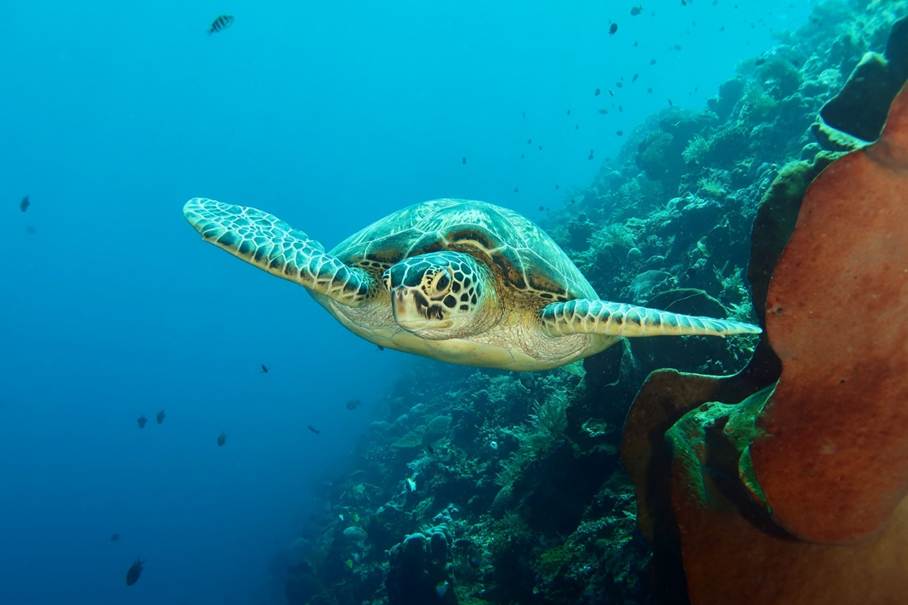
From my first moments underwater, my initial thought was “OK, Bunaken puts the wall in wall diving”: Steep drop-offs covered in pink and red gorgonians, bouquets of whip coral with clouds of pyramid butterflyfish buzzing around, and turtle after turtle gliding effortlessly past us. Below us, the abyss (more than 300 meters deep) hinted that anything could appear out of the blue. My private guide, Frenki, was a seasoned pro with underwater photographers and read my intentions before I even pointed. But beyond drift diving and wide-angle underwater photography, Bunaken’s walls are full of macro critters. On my first day, we found many individuals of the same two nudibranch species: Willan’s chromodoris and the royal hypselodoris.


At 5.30 pm, I joined the evening’s black-water/bonfire dive, after an in-depth briefing by Dimpy, the resort’s in-house marine biologist and one of the dive centre managers. I’d never done one before. Floating in the dark with lights attracting the larvae of reef creatures felt like drifting through space. The highlight was a flounder larva shaped like a ribbon and a tiny mantis shrimp larva: strange, beautiful, and utterly alien! Having no idea what I was doing with my camera settings, I definitely need to do it again.
My dive parameters
- Pangalisang – 34 m deep – 64 min – 29 °C
- Bunaken Timur I – 21 m deep – 65 min – 28 °C
- Alung Banua – 20 m deep – 63 min – 29 °C
4th of June
At last, the clouds scattered and sunlight finally shone through the water, so I decided to go on 3 day dives to make up for the lack of light on the first day. The site called Fukui was one of those dives where you can’t decide where to look — up, down, or straight ahead. The visibility stretched forever as we drifted along the wall, and then at about 40 m deep, I spotted two spotted eagle rays gliding below our fins.


Not long after, Frenki tapped his tank: my very first mandarin fish, and just as quickly as I saw this colourful tiny fish, it disappeared into the reef. I nearly cried in my mask and stayed on the spot for an extra 5 minutes, hoping to see it again. Minutes later, he pointed again — a Pontoh’s pygmy seahorse, smaller than a fingernail and again, a first for me. Even smaller than his more common cousin, if you think taking a good picture is hard, this one is a lot harder. By the end of the day, my camera batteries were running low, but my excitement wasn’t.


My dive parameters
- Fukui – 30 m deep – 60 min – 29 °C
- Bunaken Timur II – 28 m deep – 66 min – 28 °C
- Lekuan III – 22 m deep – 68 min – 29 °C
5th of June
The next morning, the boat headed straight for Manado Tua, the volcanic island of Bunaken National Park, rising like a pyramid from the sea. The water looked gorgeous with all the shades of blue and aquamarine under the full sun. Descending into the blue, we were greeted by a massive school of batfish, their silver-and-yellow bodies catching the light like a mirrorball. Then came the turtles. I thought I’d seen a lot before, but I was wrong. They were everywhere: resting on ledges, rising through the blue, swimming in pairs. Forget about Hawaii, Bali or the Philippines, Bunaken is my new turtle capital of the world. There were so many that I lost count after roughly 30 or 40 on that one dive in Mandolin Point. Yes, I told you, that many!


Back on Siladen, I spent the afternoon wandering the island with a group of local kids who were thrilled to practice their English while I practised my Indonesian. They showed me their school, church, and their favourite spot at the pier for photos. Siladen Dive Resort employs many of the island’s residents, and the community connection runs deep. It’s not a private enclave, it’s part of village life. By the afternoon, I finally caught the sunset on the beach with a chilled lemon beer until the last light faded behind the Manado Tua volcano. The view from Siladen of Bunaken and Manotua islands must be the best in all of the national park.


My dive parameters
- Negri – 32 m deep – 59 min – 30 °C
- Mandolin Point – 30 m deep – 63 min – 30 °C
6th of June
For my final day, we left the national park to dive the mangrove-lined northern shores of Manado. The scenery from the boat was lush and untamed, with Mount Tumpa (another volcano) in the background. Underwater, the shift was dramatic: sandy slopes with tiny bursts of colour. In just two dives, we logged twelve nudibranch species, four of them new to me: the flame flabellina, the black-spotted trapania, the orange-edged sapsucking slug and the jewel sap-sucking slug. When my guide pointed out an orange dot, it was only by experience that I recognised it as a baby frogfish. Only with the macro lens of my camera was I able to see the details. Do I need to stress again how impressed I was with my dive guide?


After rinsing my gear and placing it in my mesh bag, it was time to move on. Coral Eye Resort‘s boat arrived to pick me up after lunch. The handoff between Siladen and Bangka Island is seamless, as the two resorts are owned by the same company. As we cruised north-east for an hour and a half, passing the northernmost point of Sulawesi, one of the divemasters was playing softly on a ukulele. I watched the mainland coast fade into the horizon and ended up falling asleep, rocked by the waves. OK, up to now, you might think, except for the overnight arrival in Manado, it’s been pretty straightforward, not to say luxurious. Well, it keeps going for a couple of days more like this, but bear with me, and you’ll see.
My dive parameters
- Budo 1 – 28 m deep – 67 min – 29 °C
- Bolung – 24 m deep – 67 min – 29 °C
2 – Diving in Bangka Island

7th of June
I was now based at the Coral Eye Resort, a former marine biology outpost turned eco-resort on Bangka Island, along one of the most beautiful beaches I’ve seen in Indonesia. The island felt immediately wilder, and the water, with its shallower reefs, seemed more luminous. You can choose between standard rooms in the main building where the scientists used to stay, or you can book one of their brand-new garden or seafront villas. While my villa had a sleek but cosy design to fall for, I couldn’t stop raving about the camera room, inside what used to be the marine biologists’ lab.


The reefs of Bangka are an underwater world of colourful walls, canyons, and coral gardens. At Batu Goso, the site that quickly became my favourite, I drifted through a maze of steep slopes and caverns where I saw a rare blue soft coral I’d never seen before: a blueberry gorgonian. I didn’t even know such a thing existed until I looked it up later that evening.


The following dives were gentler, sandy-bottomed sites framed by coral bommies. They didn’t have the same grand topography, but they were a feast for macro. Between some familiar nudibranch species, a porcelain crab posed perfectly in a bubble coral, and so did a pink painted baby frogfish, and to my delight, I met my second wonderpus octopus in Indonesia.


My dive parameters
- Batu Goso I – 36 m deep – 66 min – 29°C
- Areng Kambing Wall – 23 m deep – 76 min – 29°C
- Buluh Kuning – 21 m deep – 61 min – 29°C
8th of June
We set out early, heading toward the waters off Tangkoko National Park. I hadn’t expected to dive here, and that’s often how the best experiences begin: with no expectations. Along the sandy slopes, my guide’s sharp eyes led us straight to a blue-ringed octopus, one of the dream species I had come to Sulawesi hoping to see. Despite its tiny size, the highly venomous cephalopod was changing colour from white to red and flashing its bright blue rings under our dive lights. Getting the warning message, we gave it space.


Back on the reef, I crossed paths with more familiar creatures: a thorny seahorse swaying gently in the surge, a peacock mantis shrimp guarding its den, a clownfish hosting a pale parasite in its mouth. I lingered on each subject, enjoying the opportunity to take shots I rarely have the time to take. That night, I followed the slope off Coral Eye for a night dive. The current was surprisingly strong and we saw very little action until, by sheer luck, I spotted a black baby frogfish bouncing along the sand. My guide laughed afterwards and said, “Why do you even need me?” The truth was, it was the very first time I found one by myself, but I took it as a compliment.
My dive parameters
- Batu Mandi – 29 m deep – 67 min – 29°C
- Yellow Coco – 23 m deep – 76 min – 29°C
- Coral Eye House Reef (night) – 14 m deep – 68 min – 29°C
9th of June
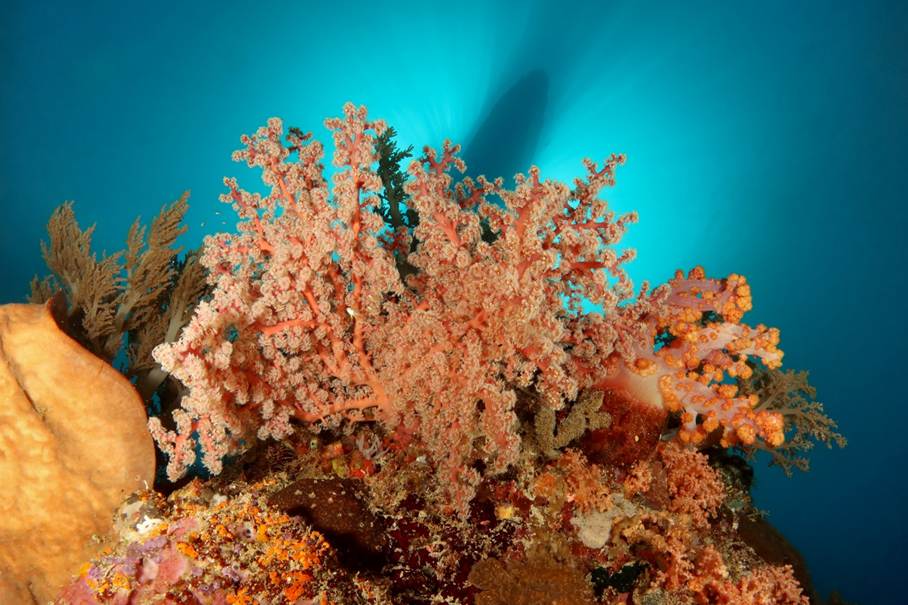
Bangka gave me one last symphony of colours before I left. At Tanjung Husi, the reef was alive with both big and tiny critters: a pale giant frogfish perched on a sponge, two baby white-tip sharks hiding below a rock, and a pygmy seahorse playing hide and seek in its Muricella gorgonian. Midway through the dive, I switched to wide-angle and caught my first proper backlit coral shot, the sun framed perfectly above as a boat drifted at the surface. It felt like a reward for all those past trial-and-error attempts.


Busa Bora was my farewell dive: dense schools of fish, a kaleidoscope of anthias and fusiliers, and one last special nudibranch, a delicate Batangas halgerda. After rinsing my gear, Coral Eye Resort‘s kitchen prepared me a sandwich to take on the boat. It was a small but deeply appreciated gesture to give me enough time to finalise packing without stress. From there, a smooth 30-minute ride back to the mainland, followed by a one-hour drive, brought me to Tangkoko Birding Cottage by mid-afternoon. The river outside my bungalow window offered the perfect soundtrack for a well-deserved nap before heading into the jungle of the national park.


That evening, I followed my guide, flashlight in hand, searching for the tarsiers as they woke up when the sun sets. We were about twenty visitors, gathered quietly, and yet the moment they opened their round eyes and began their high-pitched calls, time seemed to stop. I had the opportunity to see a couple before in the Philippines but my second encounter with the tiniest primate in the world was nicer in the heart of the jungle. Our walk at dusk also included seeing my very first bear cuscus, the Sulawesi ones to be specific which are endemic to the Indonesian island. Thanksfully, my guide had eagle eyes and a spotting scope otherwise it would be almost impossible to see them as this adorable marsupial loves hanging high in the trees.
My dive parameters
- Tanjung Husi II – 24 m deep – 66 min – 29°C
- Busa Bora Timur – 19 m deep – 68 min – 29°C
3 – Diving in Lembeh Strait

10th of June
I headed back into the heart of the Tangkoko forest with my birding guide at the first light of dawn. We ventured deeper, away from the main trails. Since the hornbill nesting season hadn’t started yet, we tried our luck but didn’t have any success. But these aren’t the only wonders of the national park. A flash of turquoise and orange in the canopy turned out to be a kingfisher, and then, guided by their sounds, we found a group of black macaques, the young ones playfully wrestling. Further on, we spotted a female couscous with her baby. The whole spectacle was well worth the early start.


By the time I returned to the guesthouse, my driver from Lembeh was already waiting. He was a cheerful older man who turned our one-hour drive to Bitung into a Bahasa Indonesia lesson, since he was so happy to have, for once, a foreign passenger who spoke his language. My next stop: a pearl farm turned guesthouse called Kaya Kirana, where I’d be diving with Rumah Selam, the dive centre across the road. The rooms were spotless, the food home-cooked, and the ocean was right there with the dive boat docked at the farm’s small pier. I even got a tour of the pearl oyster hatchery, where I learned that the oysters were raised here before being sent to Raja Ampat (!).


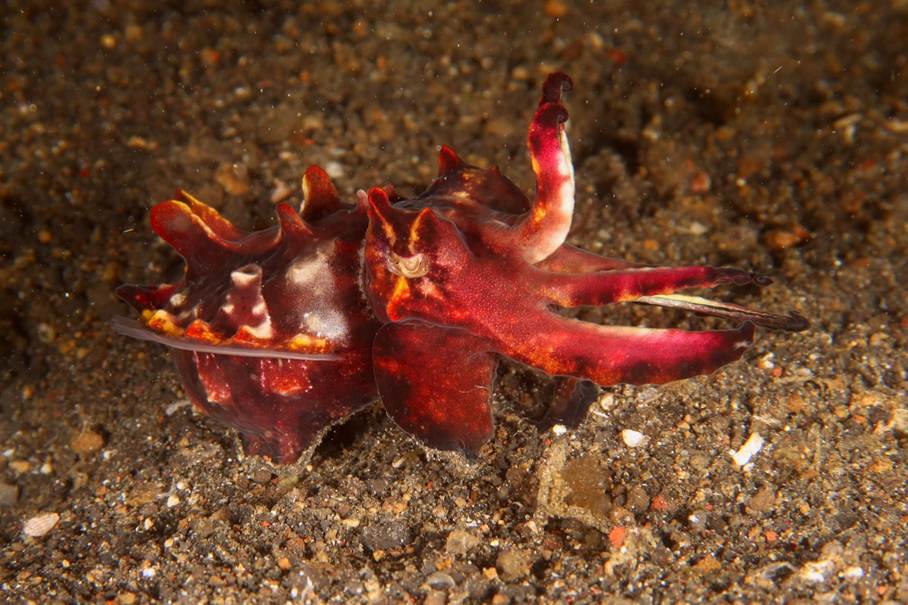
That evening, I geared up for my first Lembeh dive, a night dive with a chance at finally finding the flamboyant cuttlefish. My guide spotted one within twenty minutes! It was everything I’d hoped for: tiny, pulsing with psychedelic colours. Then came more silhouettes in the beam of our torches — a long-arm octopus, a juvenile coconut octopus, even a stargazer half-buried in the sand. Lembeh’s muck wasn’t as murky or dirty as I was told; instead, it felt like being inside a treasure chest where every square centimetre hid a marvel.
My dive parameters
- Jahir – 20 m deep – 63 min – 29°C
11th of June
We left at 8:30 am for 2 dives, one on each side of the strait. The first, on Lembeh Island’s shore, was quiet. It was just us and the gentle slope of silt and sand, dotted with some sponges and seaweeds. To start with, my guide showed me flamboyant cuttlefish eggs, each translucent sphere containing a tiny, ghostly-white cuttlefish with splarkly dots. He knew I would be delighted with this. I could tell through his mask how happy he was to make me happy. Nearby we found a common seahorse, and a little bit everywhere was a new encounter for me: the Marie’s mexichromis which displays a pink and orange mantle, hence it was easy to spot more than a few against the dark silt. A glorious flatworm, an emperor shrimp and a cuttlefish later, it was time to ascend for our surface interval.


After coffee and sticky local sweets during the surface interval, we crossed the strait for its most famous site: Nudi Falls. The name promised a lot, and it didn’t disappoint. The shallow wall was full of life: a Pontoh’s pygmy seahorse, a Lembeh seadragon, a yellow giant frogfish, and so many species of nudibranchs that I struggled to keep up: Emma’s Hypselodoris, the tropical gasflame nudibranch, Yonow’s nembrotha, and the crested nembrotha, to name a few. The only downside? Too many divers. Even with the local system regulating the number of boats per site, the site still felt congested.


Back on land, the dive centre rinsed and dried everything while I enjoyed one last simple but tasty lunch at the pearl farm before heading out. For 50,000 IDR, the toll road from Bitung to Manado cut the trip to barely thirty minutes, a speed I didn’t know was possible in Sulawesi. I checked into the Swiss-Belhotel Maleosan in the city centre for one night of comfort to get plenty of rest before the night shuttle taking me to Gorontalo the next day. The hotel was so beautiful and well-located. I took away one piece of cake from their luxurious pastry shop and I enjoyed a restful moment in my room with a cup of coffee, all while looking out the window at the panoramic view of Manado. Thanks to having a spacious room, I gathered my last bit of energy and repacked properly for the limited number of pieces of luggage I was allowed on the 8-seat minibus.
My dive parameters
- Tanjung Tebal – 24 m deep – 63 min – 29°C
- Nudi Falls – 19 m deep – 64 min – 30°C
12th of June
After recharging my batteries with a good night’s sleep and a feast at the Indonesian breakfast buffet of the hotel, I called a Grab motorbike taxi. We drove for 20 minutes south to see the city’s giant Jesus statue (a bit underwhelming due to its location by a busy road), and 10 minutes further, I climbed up to the Makatete Hills (a hidden gem I later realised I could see from my hotel room window). The sprawl of the city below, framed by volcanoes and the sea beyond with the islands of Bunaken National Park, is well worth the extended trip from the centre. I immediately understood the reason of the wedding chapel in front of me. It wasn’t easy to get back to the centre. Thankfully, I asked for help at the Makatete café, and a worker offered to give me a lift down the hill on his scooter.


In the city, I wandered through the Bersehati market, by the harbour where the ferries leave for Bunaken Island. I walked past endless piles of fruit and vegetables, the sharp smell of dried fish, and the smiles of the vendors calling me “Mister!” My broken Indonesian got me instant success everywhere. In the small Chinatown of Manado, not far from the market and with a couple of colourful buddhist temples, I stumbled upon a small school where kids were practising taekwondo. I used to train myself, and the moment I stopped to watch, I was instantly surrounded, teachers, students, everyone wanted photos. Their joy was infectious.


By sunset, it was time to collect my bags at the hotel and board the night bus to Gorontalo. My initial plan to fly had collapsed when Lion Air cancelled their newly reopened route — locals call it “Lie-on-Air” for a reason. Still, the 12-hour bus turned out better than expected: reclining seats, a pillow, a thin blanket, but a broken USB plug, which meant no phone charging for the rest of the journey. Once we passed the traffic of Manado, the drive was quite sporty through the curvy roads, and we got shaken up properly. No great for sleeping, let’s say I managed to rest.
4 – Diving in Togean Islands National Park

13th of June
We rolled into Gorontalo at 6 am, earlier than expected, but still a perfect time to get breakfast at the Yulia Hotel I had booked for the next night. I was just wrecked enough to take a bad decision. Thinking the early arrival would be the perfect window to squeeze in one more bird-watching tour in Bogani Nani Wartabone National Park. In reality, it turned into a survival test: one hour by taxi, thirty minutes by motorbike, four hours on forest trails, for very few sightings and a lot of wobbling on sleep-deprived legs. I’d wanted to get off the beaten path; I did, and the colourful villages along the way were lovely, but I couldn’t help comparing it to Tangkoko, even though the conservation outpost for the megapode birds (we got to release two chicks in the wild) was a good surprise.


Honestly, I should have booked an extra night at the hotel and walked around Gorontalo centre in the afternoon. I would have saved myself energy and money. By the time I finally made it back to my room, I showered, crashed in bed, and did something I’d never done since moving to Indonesia: I ordered food on Gojek. Sushi in bed, blackout sleep, alarm set for 6 am. Not glamorous, but that was the best I could do in that moment.
14th of June
Breakfast at the Yulia Hotel was lovely: lots of local options, including “kwetiau goreng” (fried large rice noodles) and my favourite “kue” and “jajanan pasar” (Indonesian cakes and sweets). By 7 am, my driver was waiting. We swung by Gorontalo airport to collect a group heading to the same place as me, then drove another 2.5 hours East through hills to the quiet jetty of a small resort in Boalemo where the speedboat from Sanctum Una Una Dive Resort was waiting. The Togeans already felt remote, and Una Una even more so: a lone volcanic island sitting slightly aside from the rest of the archipelago, but still part of the Togean islands national park.


Two hours of smooth seas and a bit of rainfall before arriving, we reached the eco dive resort of Sanctum Una Una. It wasn’t polished luxury, and that’s precisely why it worked. It is a relaxed and cosy place. Thanks to their affordable pricing, you can even treat yourself to a seafront bungalow with a hammock facing the ocean and an outdoor bathroom with a tub, without breaking the bank. This is the kind of place where you instantly think, “Six nights? Good. Anything less would have been a mistake.”
15th of June
My bungalow faced East, and I woke with the sky already blushing over the sea. Sunrise without getting out of bed? That felt like a very acceptable definition of luxury! I promised myself that tomorrow I’d be up a bit earlier with a coffee in hand, swaying in the hammock as the light came up. After savouring my toast and eggs at breakfast, I got myself ready for 4 full days of diving.


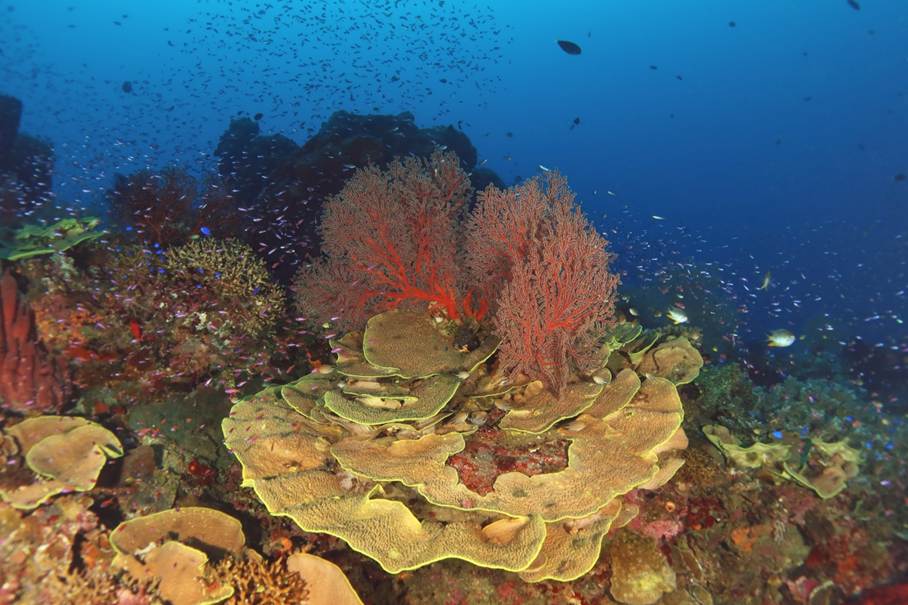
From the very first dive, dropping onto the wall, I was hit first by scale: giant tubular and barrel sponges rising like structures, gorgonians in XXL cascading into the blue. It felt prehistoric, like the “Jurassic Park reef” I didn’t know I’d been looking for. Very quickly, it was obvious my macro lens would stay in its box: this was wide-angle country. I recruited the Sanctum team as underwater models, and we spent those first dives playing with silhouettes and scale in perfect visibility, drifting gently with not another dive boat in sight. This is why you cross half of Sulawesi.
My dive parameters
- Greta’s place – 31 m deep – 58 min – 30°C
- Pinnacle I – 32 m deep – 61 min – 30°C
16th of June
Day two took us to the south of the island, a little further out, off a completely deserted beach. We spent our surface interval on the pristine white sand while our divemaster drew the dive map in it. Apollo, our first site, is known for big barracuda action; they ghosted us that day, but the plateau itself was beautiful enough to forgive them: soft corals, anemones, and thick schools of blue trevally, blue-striped snappers, sixbar angelfish and bignose unicornfish (Naso vlamingii, a first for me) so dense it felt like gently pushing fish out of the way.


The second dive kept the same energy: schooling fish over rose-shaped hard corals and enormous sponges, with slightly lower visibility that gave everything a moodier feel. That’s where the barracudas finally showed up! It wasn’t the massive tornado we’d hoped for at Apollo, but a satisfying silver ribbon in the blue.
My dive parameters
- Apollo – 32 m deep – 46 min – 30°C
- Hong Kong – 25 m deep – 52 min – 30°C
17th of June
On my third day, Sanctum’s manager suggested we go diving at Satellite, much deeper, with navigation in the blue towards Pinnacle II. The sky stayed stubbornly grey, so at depth I had to crank the ISO and let my strobes work hard. Still, I loved it: the swim-through in open water, the impression of drifting between underwater summits, and once again those oversized gorgonians and sponges rewriting my sense of scale underwater.


Pinnacle II offered a contrast with its delicate hard corals in perfect shape. Then came one of my favourite moments: a juvenile batfish that decided to share our safety stop, looping around us with a delicate elegance. The second dive of the day turned into one long love letter to Una Una’s reefs. Everywhere I looked, there was a perfect composition waiting: hard and soft corals balanced, sponges, anemones, and clouds of anthias in just the right light. It felt like the reef was doing the styling for me.
My dive parameters
- Satellite + Pinnacle II – 36 m deep – 56 min – 30°C
- Kingston Wall – 30 m deep – 61 min – 30°C
18th of June
With conditions this good, saying no to three dives for my last day would’ve been rude. By then, Sanctum’s DMT, following along to sharpen her underwater photography awareness, had transformed her trim: better buoyancy, cleaner lines, and much nicer silhouettes in the frame (good practice going far beyond aesthetics). One of my favourite shots of the whole Sulawesi trip is her next to an enormous orange gorgonian at least ten times her size.


Then we finally dived into the myth: Black Forest. A group of marine biologists once dated this reef structure as millions of years old and suggested it might be a genetic source point for parts of the Coral Triangle. Whether you go full science or not, underwater, it feels ancient. We drifted through surreal shapes — a forest of vertical “pine trees” shifting into “cabbage” fields and then “mushroom” formations. It felt like crossing different eras of reef evolution in a single dive. It was so unique that it almost felt illegal to be there.


To close the day, the team indulged me with an extra macro dive. In one run, we logged a geometric chromodoris, a reliable chromodoris, a white-spotted thuridilla, a samla bicolor, a girdled glossodoris and a harlequin shrimp. Una Una may not market itself as a macro hotspot, but it clearly has range.
My dive parameters
- Abyss- 32 m deep – 54 min – 29°C
- Black Forest – 17 m deep – 66 min – 30°C
- Barren Land – 19 m deep – 73 min – 30°C
19th of June
With my Sulawesi dives officially wrapped, I swapped my fins for a mountain bike to see Una Una above the waterline. Cycling under the equatorial sun was sweatier than expected, but I like seeing the “backstage” of islands: cows grazing, kids waving, tracks creeping into the forest. I pushed on until the trail dissolved into deep sand and then circled back via the harbour, where I learned there’s a cargo boat to Una Una roughly every nine days from Gorontalo, an ultra-budget alternative for those with time and patience.


Back at the Sanctum Una Una Dive Resort, my gear finished drying just in time for the 1.5-hour hop to Wakai on a wooden boat, lifejackets doubling as cushions. A quick wander in its surprisingly busy streets, some food, and it was time to board the overnight ferry to Gorontalo, my first Indonesian night ferry. It was a surprisingly gentle mix of families and a few travellers. Booking a sleeping pad in the “VIP” room turned out to be the perfect call: air-con, quiet, felt safe. I peeked at the regular deck, smoky, noisy, crowded, and retreated gratefully. After a few hours of sleep, I woke up naturally at sunrise with Gorontalo’s mountains overlooking the ocean.


20th of June
We docked at 7 am instead of 6, and for a brief moment I thought I might be cutting it fine for my flight: the airport was an hour away. Lion Air solved that concern in their own particular way with a two-hour delay, which for them almost counts as punctual. I shared a taxi from the harbour for 100,000 IDR, reached the airport in good time, and even had time for a real breakfast before boarding for Makassar around midday.


By the time I checked into the Swiss-Belhotel Makassar in the afternoon, used the toll road with my taxi and took a long shower, my body went into full shutdown (again). I made it as far as a drink at the rooftop bar and a small haul from the convenience store opposite. Another glamorous solo travel ritual: cup noodles in a fancy room after a very long transit chain.
21st of June
With my flight to Bali in the evening, I gave Makassar a few honest hours to see if it deserved a bigger place in the sequel. After the hotel breakfast honouring both Indonesian and Chinese specialities, I walked down to the seafront promenade: people sipping coffee, kids running, couples taking photos, and the 99 Dome Mosque drawing all the attention across the water. Opened in 2022, it’s one of those buildings that looks bold in pictures and even more striking in real life.


I dipped into a shopping mall to resupply for my life back in Amed, then headed to pick up my bags. The driver who’d brought me from the mall offered to wait and take me to the airport for less than the app rate; I proposed 200,000 IDR, and he insisted 150,000 was fair. After one last round of Lion Air delay bingo, I finally boarded. Back to Bali and to preparing the second part of my discovery of the vast island of Sulawesi.
5 – Exploring the Toraja Country

5th of September
Flying back to Makassar with Garuda Airlines after Lion Air roulette felt like switching dimensions: on time, smooth, and with a stunning aerial view over east Bali — Candidasa, Agung, Lempuyang, Amed, all laid out below. I booked a hotel near the airport to make an early start easier, and while the Harper Perintis did the job, it came with the usual “airport box” syndrome. No real neighbourhood, nowhere to wander, just four walls and a pool terrace. For one night, it was fine, but I did catch myself wishing I’d pushed the extra 30 minutes into town. A few drinks by the pool, a good dinner with Sulawesi flavours, a hot shower, and it was time to set my alarm for the long road to Tana Toraja.
6th of September
The drive from Makassar to Rantepao is long, 9 hours with a driver, 12 hours by bus, even if it’s just a bit over 300 km. Technically, you can link the Togian Islands to Makassar through the Toraja Country via Ampana, Poso, and Tentena, but to make it worthwhile, I would have needed an extra week. I chose to make Tana Toraja a separate trip, and, logistically, it’s just simpler to tackle it from Makassar. If you’re short on time, the sleeper buses to Rantepao are a solid, cheap option. I went for a private driver so I could explore some spots along the way.


First stop, less than an hour from Makassar: Rammang-Rammang. Karst towers rising over rivers and wetlands, mangroves and palm trees: it’s one of those places that makes you think, “Why isn’t everyone talking about this?” Boats run as a cooperative from the jetty in Maros with fixed prices, and you can hop between different stops easily. With my guide, we chose the furthest route, which included a walk through a village, fields, lakes, and caves. Rammang-Rammang is much nicer to visit early in the morning, when the heat and humidity are lower.
After a grilled seafood lunch in Parepare with sea views and local prices, then a coffee stop with a breathtaking view of the mountains in Enrekang, we finally reached the Santai Toraja Hotel in Rantepao around 7 pm. Thankfully they have an on-site restaurant; after all that journey, I didn’t have energy left to hunt for dinner.
7th of September
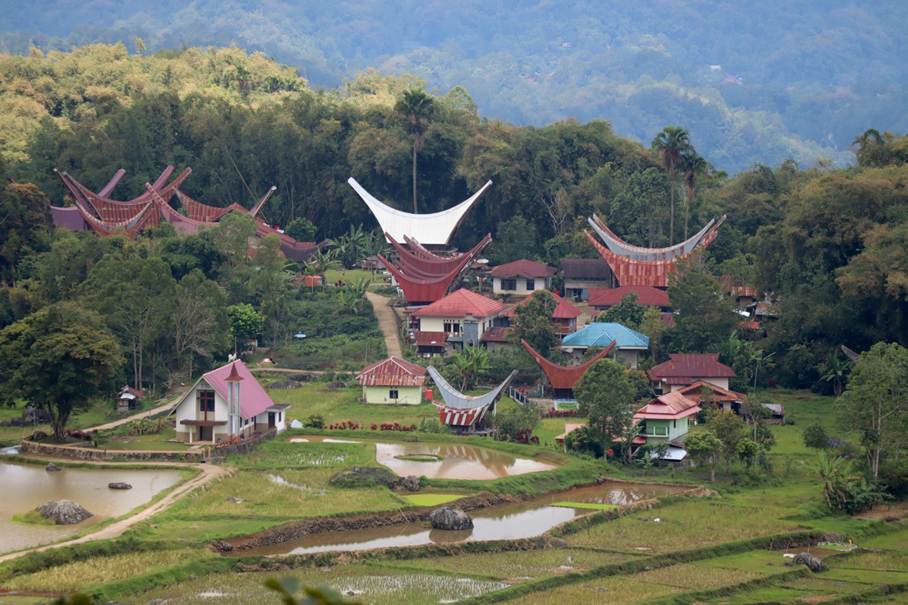
The next morning, just a few minutes from the hotel, my guide pulled over and pointed out the first tongkonan: the traditional Torajan houses with their curved boat-shaped roofs and intricate carved pannels. Suddenly, I realised: Toraja culture isn’t confined to a couple of “heritage villages.” It’s everywhere, including right in the centre of Rantepao, the local capital of the Toraja Country.


Lemo, about 30 minutes south through rice fields and hills, was my first formal introduction to Torajan culture. Carved cliffs with burial chambers, “tau-tau” wooden effigies standing in balconies to watch over the living, buffalo and rice woven into every explanation of status and ceremonies. The woodcarvers here are astonishing; their skills are visible in the colourful façades of the tongkonans and the expressions of the tau-tau.


On the way to Kete Kesu, I kept asking to stop — farmers threshing rice, buffalo herders in the paddies, and more tongkonans standing in lush countryside. Kete Kesu itself looked like the most visited spot in Tana Toraja, considering the number of souvenir shops. The village features a central plaza lined with towering tongkonan, heavily decorated with buffalo horns; standing stones at the entrance; and, at the back, a steep cliff flanked by hanging coffins, some dating back centuries.


8th of September
We drove back south toward Makale, which we passed on the way from Makassar. First stop: Pappa Batu, home to one of the oldest tongkonan in Tana Toraja, around 700 years old, with a stone roof instead of bamboo or thatch. Standing beneath it, you feel the weight of continuity; when you see modern tongkonan with their corrugated iron roofs, you understand how materials adapt while meaning tries to hold.


Above Makale stands a massive Christ statue, a reminder of Toraja’s particular balance between Christianity and older beliefs. The conversion is recent in historical terms; underneath runs Aluk To Dolo, the “way of the ancestors”, and the two now coexist in a layered mix of church and animist rituals. Even if you’re indifferent to statues, the viewpoint from Buntu Burake at around 1,700 m is worth every curvy road to get there.


Londa Cave brought all of that into sharper focus. It hides behind a steep cliff lined with tau-tau and old coffins at the bottom of a long stairway surrounded by lush green nature. You can follow young guides with gas lanterns through the caves. It’s beautiful, unsettling, and fascinating with love tragedies and narrow passages that force you to crawl. Not for the claustrophobic, but if you can handle it, it feels like walking through a physical version of Toraja’s relationship with death: close, continuous, accepted.
9th of September
This was the day I’d been both anticipating and slightly dreading: attending a Torajan funeral. I dressed modestly in black (a simple black t-shirt and a dark colour sarong does the job) and started at the Rantepao livestock market, where buffalo, highly symbolic animal for Torajan people, change hands at prices that would fund a car in Europe. The animals you see here may well end up as sacrifices; it’s sobering, and that’s the point. We took the opportunity to shop for gifts to thank the family welcoming us to their ceremony (cigarettes being one of the best choices).


Without a local guide, I wouldn’t have considered attending any ceremony. There are codes, spaces, and hierarchies you can’t guess without context. As we handed our gifts over to our hosts, the women managing the kitchen heard me speaking in Indonesian and immediately sat me down with tea and sweets. Whatever carefully plotted “neutral foreigner” role the guide had planned for me dissolved into conversation and laughter. I didn’t use my camera; it didn’t feel right. Pigs were slaughtered nearby, and I was told the next day would be for buffalo. The sacrifices are an immense display of status, with a single prized albino animal costing up to 1 billion rupiah (50 000€). None of this is easy if you’re sensitive to animal suffering; I made a conscious decision to be there, to learn, and to hold the discomfort rather than look away.


On the way back, we stopped in Tumbang Datu, where some of the most beautiful tongkonan I’d seen stood in a tight cluster. A woman spreading rice to dry explained, almost casually, that her mother was “sleeping” inside the house. This is the common way of speaking about relatives whose bodies remain at home for months or years until the family can afford a proper funeral to honour them. Later that day in Rantepao, I went hunting for a good coffee. I found ToRi Coffee, where a carefully brewed V60 of Toraja single origin beans took me straight back to the same kind of revelation I’d had in Panama.
10th of September
For my final day in Tana Toraja, we headed north. Palawa was our first stop, its tongkonan lined up like a painted gallery. The souvenir sellers were persistent but good-humoured; I left with a minimalist black-and-red Torajan batik that now lives in my kitchen in Bali and reminds me that yes, sometimes souvenirs are worth embracing when they’re local and this well-made.


We climbed higher to Batutumonga, around 1,300 m above sea level, where rice terraces spread below and Rantepao shrinks into a cluster. At Lo’ko Mata, tombs carved into a massive boulder sit framed by a bamboo forest, another quiet, grounded expression of how Torajans fold their dead into the landscape. Bori, with its circles of standing stones, triggered my inner Celt — I had to explain to my guide that in Brittany, Ireland, and Scotland, we raise stones too. Different myths, same instinct to mark the earth.
On the way back, I insisted on stopping at Toraja Art Coffee for beans. I ordered two kilos; the staff looked stunned, laughed, and asked for a photo with “the crazy lady buying all the coffee”. Their house blend is now my dream morning coffee. I think Toraja coffee must be the best in all of Indonesia.
11th of September
I returned to Makassar with familiar pauses: the Enrekang viewpoint, another quick lunch in Parepare, then straight into the city centre, this time instead of the airport box. For dinner, I went all in at Ratu Gurih, a local seafood institution, and ordered chilli crab. Only later did I realise it cost four times what I’d paid in Lombok, the year before, but it was excellent, and sometimes it’s all that matters.
12th of September
This time, I wanted to explore Makassar “properly”. I walked through Fort Rotterdam, admired the architecture, winced at the museum’s tired state, and carried on to Losari beach. The promenade still works for an afternoon stroll, especially with the beautiful wooden boats (phinisi) and the 99-dome mosque lining the horizon.


Somba Opu street, once known for local souvenirs, felt half-abandoned and oddly intense — shutters down, jewellery shops empty. It happens; not every “must-see” survives its reputation. For dinner, I wanted to test one of the numerous Chinese dimsum restaurants of Makassar. The Warung Laota is a spot famous with sino-indonesian families of South Sulawesi. Big portions, rich flavours, it was a feast.
13th of September
Lae-Lae Island turned out to be my favourite Makassar surprise and frustration rolled into one. From Bangkoa pier, you can jump on a public boat once it fills up for just a few rupiah, or charter a return boat for a very reasonable price. Ten minutes later, you’re on a tiny fishing island that isn’t much bigger than a strip of land, with narrow lanes and brightly painted houses that feel like a tropical cousin of Burano. There’s a beautiful white sand beach on the northern side, and if you frame it right, it’s idyllic.


But I couldn’t unsee the rubbish. After nearly 2 years in Indonesia, if I notice it more there, it means something. I watched a woman finish cleaning her stretch of beach and then dump the bin into the harbour on the other side of the jetty. It hurts. I tried not to judge from my comfortable outsider’s position, but it hurts. I stayed a couple of hours, chatted in Indonesian with families who were delighted I’d made the effort, and shared a lemon drink with a woman repairing nets. Without even mentionning it myself, many were sorry I saw the state of their island like this.
14th of September
On the day of flying back to Bali, I’d run out of things I genuinely wanted to see in Makassar without forcing it. I considered the harbour and local markets, then decided I preferred to end on a quieter note. Yes, I admit, I went back to the shopping mall! However, it’ also because I know I’ll come to Sulawesi. There’s still at least one major diving destination missing from this story, Wakatobi. It’s the kind of place that deserves its own journey and logistics puzzle. And if Sulawesi has taught me anything, it’s that some places are worth planning around, not squeezing them all in.
Do you need more information to plan a dive trip to Indonesia?
Check these additional articles about travelling and scuba diving in Indonesia:
PIN IT FOR LATER



What an incredible journey to read about, thank you for sharing it in such a vivid and honest way. I really appreciate how you combined detailed logistics, personal reflections, and rich descriptions of the underwater world and local culture, which makes the whole experience feel immersive and real. Your storytelling truly captures the sense of adventure and discovery, and it’s inspiring to see how much depth there is to exploring Sulawesi beyond the usual travel routes.
Thank you for the great blog. We stayed at Siladen and Coral eye over Xmas and new year. We dived Wakatobi many years ago. I look forward to finishing your blog with a cuppa later. I love Indonesia and we plan to revisit in October on the Coralia dive boat to e plots the Banda sea.
Ahhh Cheers! Yes Indonesia is amazing as a scuba diver. I’m off to Wakatobi and Banda Sea this year if all go well 🙂
I love all of these!!!
Could you recommend the guide in toraja?
I’m thinking for diving trip in manado & gorontalo then head to toraja.